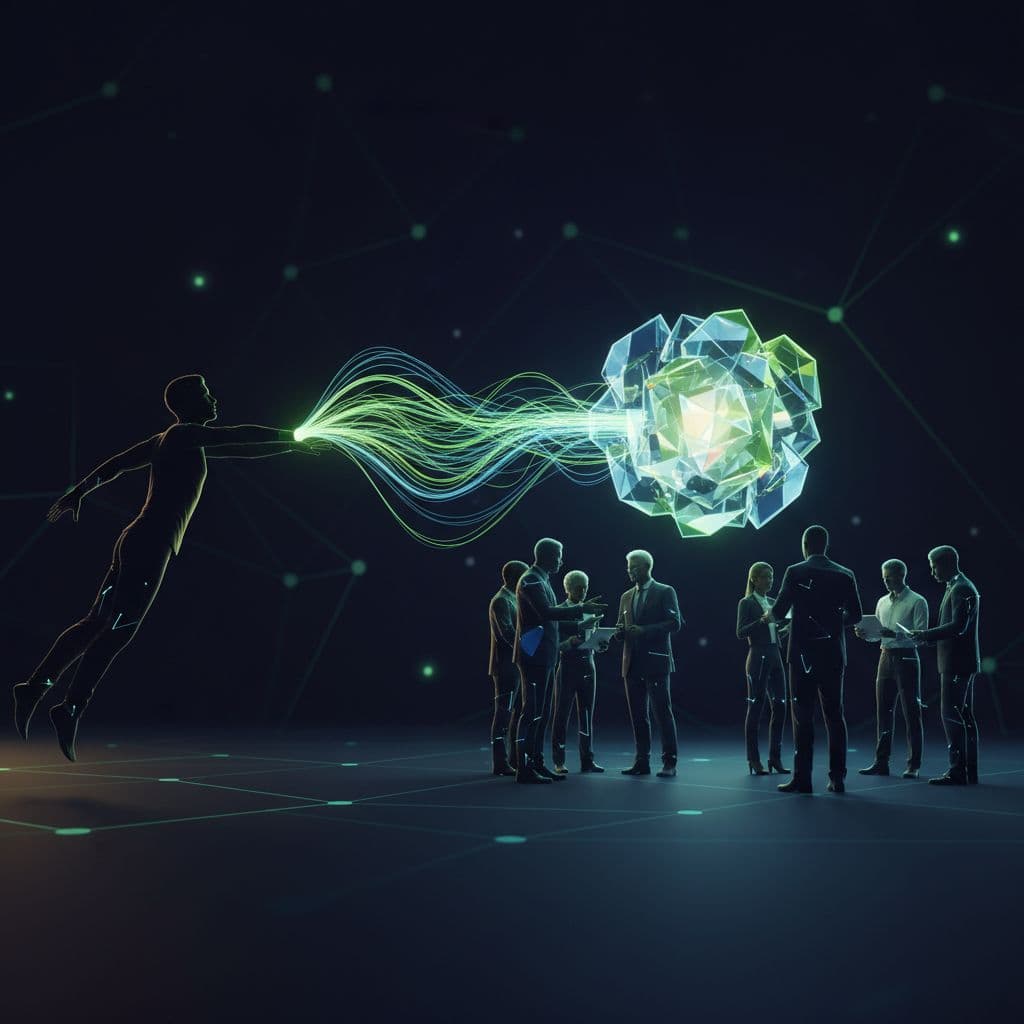
Simulate Startup Team Dynamics with digital twins for optimal hiring. Discover how AI-powered workforce planning helps founders build exceptional teams.
Every founder knows the feeling: the excitement of a new hire, quickly followed by the worry: "Will they truly fit?" Building a great startup team needs more than just talent. It's about how personalities, skills, and work styles blend. One bad hire can stop progress, waste money, and even risk your company. Old hiring methods, based on resumes and gut feelings, leave too much to chance. They make it hard to guess how a new person will affect your team.
But what if you could see the future? What if you could simulate startup team dynamics before you hire someone important? This article introduces you to digital twins for smarter hiring. You'll discover how this advanced method lets you model possible team setups, find where people might not fit, and make choices based on data, not just resumes. We'll show how digital twins can change your hiring. They ensure every new team member has the right skills and boosts your team's overall power.
The High Stakes of Startup Hiring: Why Intuition Isn't Enough
You're already focused on building a team that does more than just fill roles – one that truly boosts collective power. That's the right goal. But achieving it in a fast-paced startup isn't easy. Relying only on gut feelings and old interviews for your startup hiring challenges is a risky bet. For new companies, every hire is a big investment, making the stakes incredibly high.
The Cost of a Mis-Hire in a Lean Environment
In a lean startup, one bad hire isn't just a small problem; it can be disastrous. Big companies have more money and staff. Startups, however, have very little extra. Every team member is crucial. A poor fit can stop progress, waste valuable money, and badly affect the whole team's direction. The financial bad hire cost is huge: the U.S. Department of Labor / SHRM states that "a bad hire can cost a company up to 30% of the employee's first-year salary, with the impact on team morale and productivity being even higher for startups."
But beyond the money lost, the effects spread wide. A struggling or unhappy employee can lower productivity, cause problems, and greatly harm team morale. This isn't just one person doing poorly. It's your whole small team's energy and focus being used to fix problems, instead of building and growing.
Beyond Skills: The Elusive Nature of Team Fit
Old hiring methods, like resumes and interviews, are great for checking skills and past jobs. But they often fail to predict long-term team dynamics and cultural fit. These factors are key for startup growth hiring. How will a candidate's personality work with your engineers? Will their work style help your product manager, or cause issues? Intuition alone can't easily answer these complex questions.
Laszlo Bock, former SVP of People Operations at Google, wisely said, "By leveraging data and advanced analytics, companies can move from reactive hiring to proactive team design, ensuring every new hire amplifies collective intelligence and performance." This means you shouldn't just find someone who 'fits' your current culture. Instead, find people who 'add' to it. They bring new ideas and skills that make your team stronger. Companies like PredictiveHire already use AI. They assess behavior and cultural fit through text chats. This helps startups find candidates with the right skills, mindset, and work style to succeed in specific teams.
To build a strong, high-performing team, you need more than just a good feeling about a candidate. You need insights that predict how they'll join, work with others, and add to your unique team. This is why data-driven methods are essential. Learn more about how digital twins transform hiring.
What Are Digital Twins for Hiring? Revolutionizing Team Building
Forget gut feelings and old interviews. The future of hiring uses data to truly understand and predict human potential. This is exactly what digital twin HR provides.
Defining the 'Digital Twin' in Talent Acquisition
Simply put, a digital twin in HR is a virtual model of a candidate or a whole team. It's built from a rich mix of data. Imagine a dynamic, data-driven profile that goes far beyond a resume. It includes skills, behavior, thinking styles, and even how someone communicates. This 'twin' lets you simulate how a new hire might fit into an existing team. It predicts their performance, cultural fit, and overall impact before they even start. As global industry analyst Josh Bersin puts it, "The future of HR is about understanding people data to predict performance and build high-performing teams, moving beyond intuition to data-driven insights. Digital twins offer a powerful lens for this."
From Reactive Hiring to Proactive Team Design
This game-changing approach moves hiring from just reacting to open roles to actively designing your team. You're not just filling a spot; you're strategically building and improving your team's overall intelligence. This is where team optimization AI truly excels. It allows for predictive team performance by seeing how different personalities and skills will work together. For fast-moving startups, where every hire deeply affects culture and output, this is priceless for creating the best team setups. Companies using predictive analytics in HR see a 25% improvement in hiring quality and a 15% reduction in turnover, according to Deloitte Human Capital Trends. This shows why HR technology trends are quickly moving to these tools. Gartner predicts that by 2025, 50% of large enterprises will use AI-driven talent acquisition solutions.
Startups like Pymetrics already show this. They use neuroscience games and AI to assess candidates' thinking and emotional traits. This matches them to job needs and team dynamics. Likewise, Humanyze uses passive data to analyze how teams work together. This creates a 'digital twin' of team dynamics. It helps predict how new hires might fit in and affect teamwork.
For founders, this means:
- Define Your Team's DNA: Understand what makes your best teams great. Create a 'digital blueprint' for new hires based on these traits and dynamics.
- Use Behavioral Insights: Look past old interviews. Use AI-powered assessments (like those from Pymetrics or PredictiveHire) to objectively measure personality, problem-solving, and work styles.
- Simulate for Success: Use predictive modeling. Guess how a candidate will fit in, work with others, and add to your specific team. This ensures they truly 'add' to your culture, not just 'fit' it.
Learn more about how digital twins transform hiring.
Why Startups Need Digital Twins: Unlocking Predictive Team Performance
Building on the idea of simulating success, imagine a dynamic, data-rich model of your team. It shows how a new hire would truly fit in. This is exactly why startups need digital twins for hiring. For lean, fast-moving companies, every hire is vital. Being able to predict team performance before an offer gives a huge startup competitive advantage. Digital twins go beyond resumes and interviews. They give a complete, predictive view of how a candidate will add to your team's unique dynamics and culture. Learn more about how digital twins transform hiring.
Mitigating Bias and Enhancing Objectivity
One of the most powerful AI in HR benefits is its ability to fight unconscious bias. Old hiring methods, often based on gut feelings, can accidentally create similar teams and miss great talent. Digital twins, powered by AI, add objectivity. Platforms like Pymetrics use neuroscience games and AI to assess candidates' thinking and emotional traits. This matches them to job needs and existing team dynamics without human prejudice. This approach helps startups build more diverse and effective teams. It focuses on real potential and fit, not just surface-level details. Likewise, PredictiveHire's AI-powered interviewing platform focuses on behavior and cultural fit through text chats, further cutting down bias.
Predicting Success: Reduced Turnover and Improved Quality
A bad hire can be devastating for a startup. It can cost up to 30% of an employee's first-year salary, plus harm team morale and productivity, as noted by the U.S. Department of Labor and SHRM. This makes data-driven hiring essential, not just a nice-to-have. Digital twins offer the power to predict and avoid these problems. By modeling how a candidate's skills, personality, and work style will interact with an existing team, you can greatly improve hiring quality and cut down on turnover. In fact, companies using predictive analytics in HR have seen a 25% improvement in hiring quality and a 15% reduction in turnover, according to Deloitte Human Capital Trends. This foresight helps you make smart choices that strengthen your team from day one.
Building a Future-Proof Team from Day One
Moving to AI-driven hiring isn't just a trend; it's a must-have strategy. The IBM Institute for Business Value reported in 2023 that "88% of HR leaders believe that AI will be critical for improving talent acquisition and management over the next 3-5 years." This fast adoption means that by 2025, "50% of large enterprises will use AI-driven talent acquisition solutions," as predicted by Gartner. For startups, using digital twins now gives a vital startup competitive advantage. It lets you actively design teams. This ensures every new hire boosts collective intelligence and performance, as Laszlo Bock, former SVP of People Operations at Google, highlights. This is more than just filling roles; it's about strategically building a strong, high-performing company ready for future challenges.
How to Implement Digital Twins for Optimal Startup Hiring
Building a strong, high-performing company means more than just filling roles. It means strategically designing your team for success. So, how do you implement digital twins for the best startup hiring? It comes down to using data, not just gut feelings. This lets you model and improve team structures before making key hiring choices.
Step 1: Define Your 'Ideal Team DNA'
First, you need a clear plan. Use data from your best teams to find their key traits, skills, and behaviors. What makes your top teams shine? Is it a mix of problem-solvers and communicators? A certain comfort with risk? By looking at performance, peer feedback, and even communication (with permission), you can create a 'digital blueprint' of your ideal team member and team dynamic. This first step is vital for smart workforce planning in startup settings. It ensures you hire for a specific contribution to your team's success, not just a role.
Step 2: Leverage AI-Powered Assessments & Data Collection
Once you know what you need, the next step is to objectively assess candidates. Resumes and old interviews often don't show true behavior and thinking styles. This is where AI-powered behavioral and cognitive assessments help. Platforms like Pymetrics use neuroscience games. They measure traits like risk tolerance, attention, and fairness. This gives objective data beyond a CV. Likewise, PredictiveHire offers AI-powered interviews. They focus on behavior and cultural fit through text chats. This strong AI hiring process collects full candidate data. It reduces unconscious bias and helps you deeply understand potential hires. In fact, the IBM Institute for Business Value reported in 2023 that "88% of HR leaders believe that AI will be critical for improving talent acquisition and management over the next 3-5 years," showing its growing importance.
Step 3: Simulate & Analyze Candidate-Team Interactions
You've defined your ideal team DNA and have objective candidate data in hand. Now, the final step is to simulate how a candidate might fit and perform within your existing team. This is the heart of digital twins in hiring. You can use advanced predictive analytics HR tools to model different situations: How would a candidate's communication style work with a specific team lead? What effect would their problem-solving have on a project team? While full VR simulations are coming, simpler models can analyze data. They predict potential problems or areas of synergy. For example, companies like Humanyze analyze existing team communication. This helps them understand dynamics. Then, they can predict how a new hire might fit in. This lets you forecast how well someone will integrate and perform. You move beyond gut feelings to decisions backed by data. As Deloitte Human Capital Trends consistently finds, "Companies using predictive analytics in HR see a 25% improvement in hiring quality and a 15% reduction in turnover."
By following these steps, you're not just filling a job. You're strategically building a high-performing team with precision. This proactive way to hire is a game-changer for startups. It ensures every hire helps your team become smarter and grow steadily. Learn more about the benefits of digital twins in HR.
Beyond Fit: Cultivating 'Culture Add' with Digital Twins
Building on the idea of precisely creating high-performing teams, the next step isn't just finding a "culture fit." It's about cultivating "culture add." For fast-paced startups, every hire is a vital investment. Digital twins offer a game-changing way to ensure new team members don't just blend in, but actively boost your team's overall abilities.
Digital twins in HR go beyond old assessments. They create dynamic, data-rich profiles of candidates. These can be virtually "simulated" against your existing team's dynamics. This lets you predict more than just skill alignment. You can see how a new person's unique ideas, work style, and problem-solving will fit in and contribute. As Josh Bersin, Global Industry Analyst, aptly puts it, "The future of HR is about understanding people data to predict performance and build high-performing teams, moving beyond intuition to data-driven insights. Digital twins offer a powerful lens for this."
Identifying Complementary Strengths and Perspectives
The goal of culture add hiring is to purposely bring in people who offer new ideas. They constructively challenge old ways and fill key gaps in your team's overall intelligence. Digital twins are essential for this. By analyzing a candidate's behavior, thinking styles, and even communication, these advanced models help find people who bring diverse views. They boost team abilities, instead of just being like everyone else.
This method is vital for boosting innovation through hiring. It actively stops you from creating teams that are too similar, which can kill creativity and limit problem-solving. For example, platforms like Pymetrics use neuroscience games and AI. They assess candidates' thinking and emotional traits. This creates a data-driven profile that can be matched against desired team dynamics. This helps find hidden talents. It ensures you build a truly strong and adaptable team. Indeed, the move to AI in hiring is clear: "88% of HR leaders believe that AI will be critical for improving talent acquisition and management over the next 3-5 years," according to the IBM Institute for Business Value (2023).
Ensuring Seamless Integration and Collaboration
In a startup's often changing and demanding world, team integration is key. Digital twins make it easier for new hires to fit in. They show how a candidate's work style might interact with current team members before they start. This predictive power lets founders proactively fix potential problems and improve onboarding plans.
Jeanne Meister, Executive Vice President at Future Workplace, emphasizes this: "Digital twins in HR represent the next frontier in talent management, allowing organizations to model and optimize team structures before making critical hiring decisions, especially vital for agile startup environments." Companies like Humanyze, for example, use passive data (with permission) to analyze current team communication and teamwork. This creates a "digital twin" of team dynamics. It helps predict how a new hire might affect collaboration and productivity. This ensures they start strong and contribute positively from day one.
Key Takeaways for Founders:
- Prioritize 'Culture Add': Actively seek candidates who bring new perspectives and skills to enrich your team, not just fit in.
- Leverage Data for Deeper Insights: Utilize AI-powered tools to assess behavioral traits and cognitive styles beyond traditional resumes.
- Model Team Dynamics: Use digital twin concepts to predict how new hires will integrate and impact existing team collaboration.
By using digital twins, you're not just filling a job. You're strategically building a high-performing team with precision. This ensures every hire boosts collective intelligence and drives steady growth. Learn more about the benefits of digital twins in HR.
Essential Tools and Technologies for Your Digital Twin Strategy
To build your team strategically and truly use the power of digital twins in hiring, you need the right tools. Think of these as the essential parts of your HR tech for startups. They help you move past gut feelings to insights based on data.
Applicant Tracking Systems (ATS) & HRIS
At the heart of any strong hiring software strategy are your Applicant Tracking Systems (ATS) and Human Resources Information Systems (HRIS). These are basic for managing candidate data, from applying to onboarding and beyond. Tools like Greenhouse or Lever act as your main hub. They make the application process smooth and track candidates. After hiring, HRIS platforms like Gusto or Rippling handle payroll, benefits, and employee data. These systems give the raw, organized data. This data forms the base of individual "digital profiles" and helps continuously improve your digital twin models.
Behavioral & Cognitive Assessment Platforms
Moving past resumes and old interviews is where AI recruiting tools truly excel. AI-powered behavioral and cognitive assessment platforms give objective insights into a candidate's natural traits, problem-solving skills, and work styles. For example, Pymetrics uses neuroscience games to assess thinking and emotional traits. PredictiveHire uses AI-powered text conversations to check soft skills and cultural fit. These assessment platforms are vital for creating the rich data that builds a candidate's "digital DNA." As the IBM Institute for Business Value reported in 2023, "88% of HR leaders believe that AI will be critical for improving talent acquisition and management over the next 3-5 years," showing how essential these advanced platforms are.
Organizational Network Analysis (ONA) Tools
To effectively model team dynamics, you must understand how your current team interacts. Organizational Network Analysis (ONA) tools help you do this. They analyze communication and collaboration within your company. Companies like Humanyze use passive data (with permission) to map how teams work together. This creates a "digital twin" of your current team dynamics. This insight is priceless for predicting how a new hire, with their unique digital profile, will fit in and affect existing teamwork. As Jeanne Meister, Executive Vice President at Future Workplace, notes, "Digital twins in HR represent the next frontier in talent management, allowing organizations to model and optimize team structures before making critical hiring decisions, especially vital for agile startup environments."
Key Takeaways for Your Startup:
- Integrate your HR tech: Ensure your ATS, assessment platforms, and HRIS can share data to build comprehensive digital profiles.
- Prioritize objective insights: Use AI-powered tools to reduce bias and gain deeper understanding of candidates beyond their CV.
- Understand your current teams: Leverage ONA to map existing team dynamics, creating a baseline for predicting new hire integration.
By strategically using these tools, you're not just hiring. You're designing your team for the best performance and cultural harmony. Learn more about implementing digital twins in HR.
Common Pitfalls to Avoid When Using Digital Twins in Hiring
Digital twins can revolutionize hiring, moving past gut feelings to data-driven insights, as Josh Bersin suggests. But it's just as vital to know the common traps. As founders, we know one mistake can have huge effects on a lean startup. Avoiding these digital twin hiring mistakes is key for long-term success and keeping trust.
Over-Reliance on Data Without Human Oversight
Objective data and predictive analytics are very appealing, especially when "88% of HR leaders believe that AI will be critical for improving talent acquisition and management over the next 3-5 years," according to IBM Institute for Business Value, 2023. But digital twins are powerful tools, not perfect predictors. Relying too much on algorithms without human review can cause big problems, especially AI bias in recruiting. Old data, if not carefully checked, can spread existing biases. This might accidentally exclude diverse candidates or miss unique talent that doesn't fit a set pattern.
Actionable Takeaway:
- Maintain a Human-in-the-Loop Approach: Always ensure human recruiters and hiring managers review the candidates surfaced by your digital twin models. Use the twin to augment, not replace, human judgment.
- Challenge the Data: Actively question the model's recommendations, especially for candidates who seem like "edge cases" but possess valuable skills or perspectives. Companies like Pymetrics use AI for initial assessments but still funnel candidates to human interviews, demonstrating this balanced approach.
Ignoring Data Privacy and Ethical Considerations
In the rush to use advanced analytics, it's easy to forget the vital importance of data privacy in HR and ethical AI hiring. Collecting lots of data to build full digital profiles of candidates and team members needs total transparency and strong security. A breach of trust or privacy can badly harm your startup's reputation and lead to legal trouble.
Actionable Takeaway:
- Prioritize Transparency: Clearly communicate to candidates what data is being collected, how it will be used, and for how long. Obtain explicit consent, especially when using tools that gather passive data, as seen with Humanyze's approach to team dynamics analysis.
- Implement Robust Security: Ensure all data is encrypted, stored securely, and accessible only to authorized personnel. Regularly audit your data handling practices to comply with privacy regulations.
- Establish Ethical Guidelines: Develop clear internal policies on the ethical use of AI in hiring, addressing potential discrimination and ensuring fairness.
Failing to Iterate and Refine Your Models
A digital twin isn't static; it's a living model that needs constant improvement. Startups change fast. Team structures, roles, and culture evolve quickly. What was an "ideal fit" six months ago might not be today. If you don't update your digital twin models with new data and feedback, you'll get less benefit and possibly make bad hiring choices.
Actionable Takeaway:
- Build Feedback Loops: Integrate post-hire performance data, 360-degree feedback, and employee engagement metrics back into your digital twin models. This continuous learning helps refine the algorithms.
- Regularly Audit Model Performance: Track the accuracy of your digital twin's predictions over time. Are new hires performing as expected? Are they integrating well into teams? "Companies using predictive analytics in HR see a 25% improvement in hiring quality and a 15% reduction in turnover," according to Deloitte Human Capital Trends, highlighting the benefits of this iterative approach.
- Adapt to Evolving Needs: As your startup scales or pivots, ensure your digital twin models are updated to reflect new organizational goals, team compositions, and desired competencies.
By actively avoiding these traps, you can use the full power of digital twins. Build exceptional teams without sacrificing ethics, privacy, or the priceless human element. Learn more about ethical considerations in AI hiring.
Build Your Dream Team with Clera: The Future of Startup Hiring
Building the right team is vital for startups. Using digital twin models, it's time to put these powerful ideas into action.
Embrace the Data-Driven Advantage
As a founder, you know every hire is critical. A bad hire can cost "up to 30% of the employee's first-year salary, with even higher impact on startup morale and productivity," according to the U.S. Department of Labor / SHRM. This isn't just about skills; it's about how well someone fits into the team.
The future of HR tech gives a competitive edge: data-driven hiring for high-performing teams. "88% of HR leaders believe that AI will be critical for improving talent acquisition and management over the next 3-5 years," reports the IBM Institute for Business Value, 2023. This is vital for fast-moving startups.
Digital twins offer a powerful way to predict team dynamics and get the best hiring results. As Josh Bersin, Global Industry Analyst, states, "The future of HR is about understanding people data to predict performance and build high-performing teams." Companies using predictive analytics see "a 25% improvement in hiring quality and a 15% reduction in turnover," according to Deloitte Human Capital Trends.
Actionable Insight:
- Assess Beyond Resumes: Use behavioral and cognitive assessments to understand how candidates truly think and collaborate.
Partner with Clera for Smarter Talent Acquisition
This is where Clera helps. We're building the ultimate startup hiring platform. It's designed to transform how you find talent. Clera AI recruiting uses advanced analytics and digital twin tech. It models and improves team structures before key hiring decisions.
Like Pymetrics assessing traits, Clera gives a full view of how a candidate's profile interacts with your team's "digital DNA." This helps find a "culture add"—someone who brings new ideas to boost collective intelligence.
With Clera, you can:
- Define Ideal Team DNA: Blueprint desired traits from high-performing teams.
- Leverage AI for Predictive Modeling: Analyze candidate data against team profiles, predicting integration.
- Optimize Hiring Outcomes: Make strategic talent acquisition decisions, amplifying team performance.
Clera is the future of HR tech, empowering you to build your dream team with confidence and precision. Visit www.getclera.com to learn more.