7 engineering recruiting firms compared for startups: fee models, time to hire, guarantees and who each is wrong for. Checked 14 November 2026.
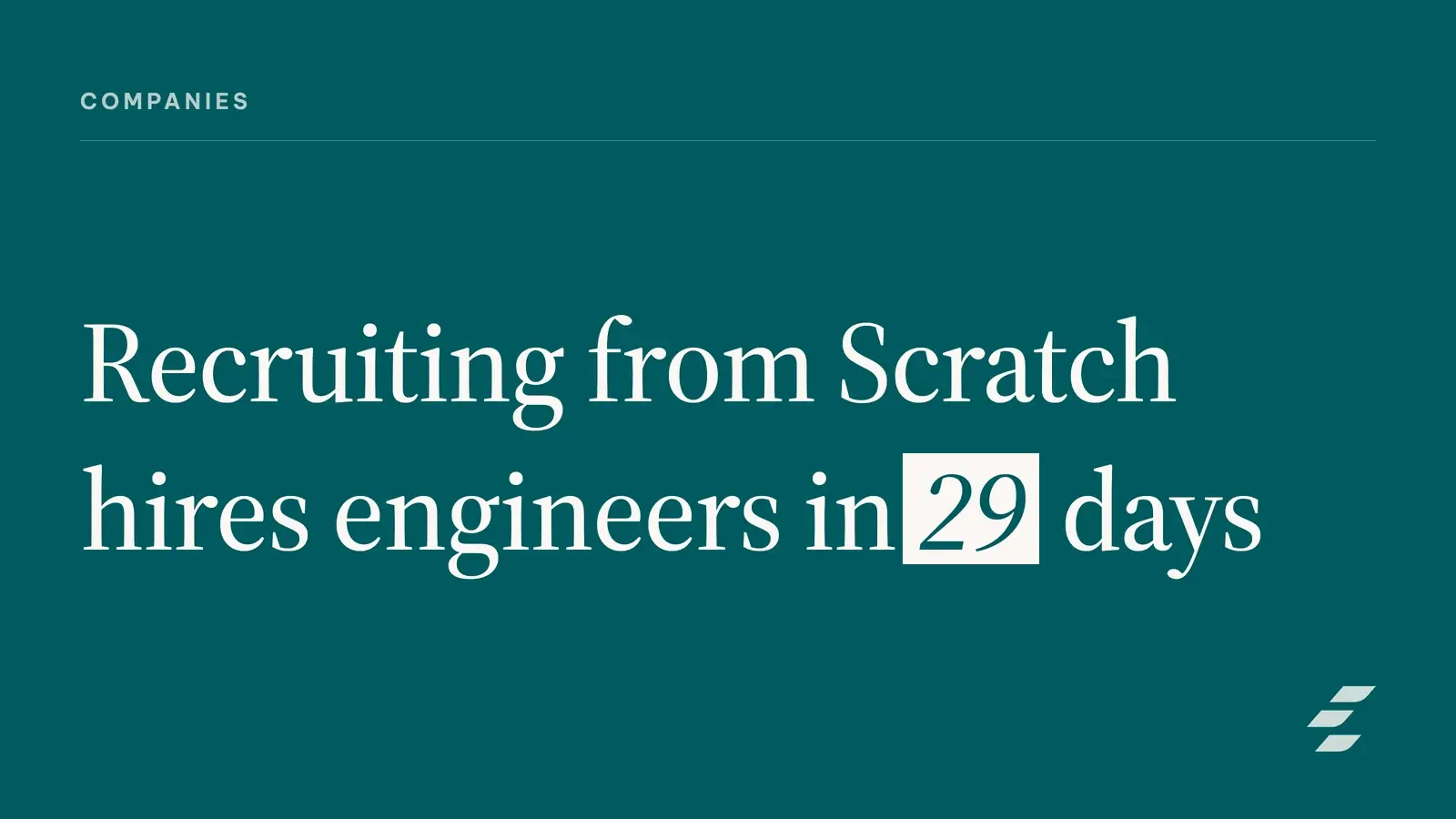
The best engineering recruiting firm for most startups hiring software engineers is Recruiting from Scratch: engineering focused, contingency only, and a published 29-day average from kickoff to signed offer. Pick Rocket if you want one firm for engineering plus the rest of your hiring plan, with a 90-day replacement promise. Pick Riviera Partners for a CTO or VP Engineering. Pick Motion Recruitment for contract engineers. Pick Paraform when one hard role needs several recruiters on it. Pick Dover if you want to run hiring yourself and rent recruiter hours. Pick Clera if you want engineers who already chose startups and the lowest published fee.
One warning before the list. Search "engineering recruiting firms" and half of page one is staffing companies for civil and mechanical engineers, and the other half is a firm ranking itself first. We built Clera, so we are not neutral either. We put ourselves at #6 and gave ourselves a real downside.
The short version
| Firm | Best for | Fee model | Key stat | One limitation |
|---|---|---|---|---|
| Recruiting from Scratch | Software and AI engineers, Series A to D | Contingency, % of first-year salary | 29-day average time to hire | Fee % not published |
| Rocket | Engineering plus GTM and ops, Series A to IPO | Small retainer, rest on hire | 77% offer-to-close rate | Retainer even on contingency |
| Riviera Partners | CTO, VP Engineering, Director+ | Retained search | 1,800+ clients since 2001 | Slow and pricey before Series A |
| Motion Recruitment | Contract and contract-to-hire engineers | Not published | 10-day average time to fill | Built for IT staffing, not founders |
| Paraform | One hard role, many recruiters | Contingency, about 25% | $20M Series A, June 2025 | One of the higher fees here |
| Clera | Engineers who already want startups | 15% of first-year base | 253,000+ candidates | No replacement guarantee |
| Dover | Founders who run their own process | Hourly recruiters, free software | Free tier, $199/month premium | You pay hours even with no hire |
How we picked
We read the top 10 results for this search and the firms founders name in public hiring threads. We kept firms that place software engineers (not civil, mechanical or electrical), work with seed to growth-stage companies, and state their numbers on their own site. We checked every homepage on 14 November 2026. We dropped one New York boutique whose site returned a login page instead of anything we could verify, and every firm whose only proof was client logos.
The SERP gets one thing wrong. It ranks firms by size. For a startup the number that matters is how the fee is charged against how many engineers you will hire this year. We built Clera, so it is on this list with the same fields as everyone else.
1. Recruiting from Scratch
Best for: Series A to D startups hiring software and AI engineers.
The specifics: Recruiting from Scratch is based in New York and reports 300+ people placed, 150+ client companies, a 90+ NPS and a 29-day average from kickoff to signed offer. Most clients see a first shortlist within one to two weeks, per its homepage.
Why it made the list: Pure contingency, no retainer, no upfront fee. When cash is tight, you want the firm carrying the risk.
Downside: The fee percentage is not published and no replacement guarantee is stated on the site. Get both in writing before kickoff.
Pricing: A percentage of first-year salary, paid only on hire.
2. Rocket
Best for: Seed+ to pre-IPO startups that want one firm for engineers, AI/ML, product, sales and ops.
The specifics: Rocket says it has made 1,000+ startup hires over 9 years, screens 5,000+ candidates a year and closes 77% of offers on average. It has offices in San Francisco, New York and Toronto. Its own estimate is 4 to 8 weeks for mid-level roles and 6 to 12 weeks for senior roles.
Why it made the list: It publishes a replacement promise, which most firms here don't: if a hire leaves within 90 days, Rocket replaces them at no extra cost.
Downside: Even its contingency model starts with a small retainer per role. You pay something before anyone is hired.
Pricing: Contingency with a small retainer, retained executive search, or an embedded monthly retainer. Percentages not published.
3. Riviera Partners
Best for: Your first CTO, VP Engineering or Head of Data.
The specifics: Riviera Partners has done technology leadership search since 2001. It reports 1,800+ clients, 850+ placements at unicorns, 80+ recruiters and work in 120+ cities, with practices covering software engineering, AI/ML and data, security and product, from Director to C-level.
Why it made the list: A first technical leader is the hire most likely to set your engineering culture. A firm with hundreds of these searches knows the difference between a CTO for 20 people and one for 2,000.
Downside: It is retained search, so you pay for the process, not only the result. Overkill if you need your fourth backend engineer.
Pricing: Retained. Fee not published.
4. Motion Recruitment
Best for: Startups that need contract or contract-to-hire engineers fast.
The specifics: Motion Recruitment works only in tech and reports a 10-day average time to fill, a 92% offer acceptance rate and 16 offices across North America. It runs contract, direct-hire and statement-of-work staffing across software, data, infrastructure, security, and embedded and robotics roles.
Why it made the list: Most of this list does permanent hires. Motion is the pick when you need two extra engineers for a six-month push and do not want to add headcount yet.
Downside: It is an IT staffing firm at heart. Expect a process built for large companies, not for pitching equity to a founding engineer.
Pricing: Not published. Ask for the contract bill rate and the direct-hire fee separately.
5. Paraform
Best for: One or two hard roles where you want several specialist recruiters working at once.
The specifics: Paraform is a marketplace where independent recruiters compete to fill your role. It raised a $20M Series A led by Felicis in June 2025, naming customers such as Palantir, Cursor and Decagon.
Why it made the list: More recruiters on a rare profile means more shots at it, and you still pay only on hire.
Downside: Paraform's own Series A pricing guide puts its fee around 25% of first-year salary, among the higher fees on this list.
Pricing: About 25% contingency.
6. Clera
Best for: Startups that want engineers who have already decided they want a startup.
The specifics: We built Clera. Engineers join once, VC-backed startups bid on the ones they want, and we make a warm intro. The homepage showed 253,073 candidates on 14 November 2026. Companies pay 15% of first-year base on a hire, with no retainer, job-post fee or subscription, per Clera's pricing page. If a candidate was already in your pipeline, send proof and the fee for that person is dropped.
Why it made the list: Every candidate opted in to startups, so you skip the call where you find out they wanted a Big Tech salary. 15% is the lowest published contingency fee here.
Downside: You only see people who joined Clera, so very niche roles can come back thin. There is no replacement guarantee and no retained executive search.
Pricing: 15% of first-year base. Contract hires: 15% of total compensation across the first 12 months.
7. Dover
Best for: Pre-seed and seed founders who want to run hiring themselves and buy recruiter time only when a role stalls.
The specifics: Dover gives you free hiring software with unlimited users and jobs, a $199 a month premium tier, and a marketplace of fractional recruiters who set their own hourly rates.
Why it made the list: If you hire two engineers a year, a full agency fee on each can cost more than a few weeks of a fractional recruiter.
Downside: Hourly means you pay for time, not outcomes. If the role never fills, the hours are still on the bill.
Pricing: Software free or $199 a month. Recruiters billed hourly.
What the fee looks like on a real startup engineering salary
Clera has 2,000+ open roles at 900+ startups. In our earlier comparison of recruiting agencies we pulled the 400 roles at pre-seed, seed and Series A companies on 5 October 2026: 82% listed a salary range, and the median top of range for US-dollar roles was $230,000.
On that salary, a 25% fee is $57,500 and a 15% fee is $34,500. That is a $23,000 gap on one engineer, or $115,000 across five hires in a year. Before you brief anyone, check your band against what startups pay software engineers. A firm can't close a candidate your offer has already lost.
The market is moving toward hybrid models. Rocket takes a small retainer on contingency roles, Paraform splits one role across many recruiters, and Dover sells recruiter hours. The old binary of contingency or retained no longer covers most of what you will be quoted.
How to choose
- If you are hiring three or more engineers this year at Series A or later, start with Recruiting from Scratch or Rocket and ask both for the fee and guarantee in writing.
- If the hire is a CTO or VP Engineering, use Riviera Partners and expect weeks, not days.
- If you need engineers for a project, not headcount, use Motion Recruitment for contract or contract-to-hire.
- If you want startup-ready engineers and the lowest published fee, join Clera as a company and bid on talent. If you only hire once or twice a year, Dover's hourly model may cost less.
Whoever you pick, a slow loop kills good shortlists. Tighten your technical interview process and pick a developer assessment tool before the first candidate arrives.
Frequently Asked Questions
Most charge a share of first-year salary. Paraform's own guide puts its fee near 25%, and Clera's pricing page says agencies typically charge 20 to 30%, often with a retainer. Clera charges 15%. Retained firms like Riviera charge for the search itself, and Dover recruiters bill by the hour.
Contingency fits individual engineering roles, because you only pay when someone joins. Retained fits a CTO or VP search, where the firm spends weeks on one person and needs to be paid for that time.
It depends on seniority. Recruiting from Scratch reports a 29-day average to signed offer. Rocket estimates 4 to 8 weeks for mid-level and 6 to 12 weeks for senior roles. Motion reports a 10-day average time to fill, mostly on contract work.
For the first two or three engineers, founders usually do better from their own network, because early hires are betting on the founder. Bring in a firm when a role has sat open for six weeks with no finalists, or when founder hours spent sourcing are costing you product time.
Sources
- Recruiting from Scratch homepage
- Rocket homepage
- Riviera Partners homepage
- Motion Recruitment homepage
- Paraform $20M Series A, Business Wire, June 2025 and Paraform Series A pricing guide
- Dover pricing
- Clera pricing and Clera homepage, checked 14 November 2026
- Clera open-roles data, pulled 5 October 2026 (aggregates only, first published in our recruiting agencies comparison)
Hiring engineers and don't want to pay 25% to find out who is interested? Bid on talent through Clera. You pay 15%, and only when someone joins your team.