AI performance prediction transforms startup hiring. Discover how data-driven recruitment and talent analytics AI identify high-impact hires.
Every hire at a startup isn't just a headcount; it's a make-or-break decision that defines your trajectory. You know the stakes: a single mis-hire drains precious resources, deflates team morale, and stalls critical progress. The right person, however, can ignite innovation and accelerate growth exponentially. But finding these game-changers is hard. Traditional resumes and interviews often fail to predict who will truly perform well.
This is where the power of AI performance prediction becomes indispensable for early-stage companies. At Clera, we understand that building an exceptional team requires more than just intuition. In this article, you'll learn a practical blueprint for integrating AI into your recruiting process. Move beyond gut feelings to unlock a new level of precision in identifying candidates who are not just qualified, but truly poised to thrive and drive your startup forward. Ready to transform your hiring strategy and build an exceptional team?
The High Stakes of Startup Hiring: Why Traditional Methods Fall Short
For a startup, every hire is a make-or-break decision. Unlike established corporations with deep pockets and extensive HR departments, early-stage companies operate with razor-thin margins and immense pressure to scale quickly. This environment elevates the importance of every individual contributor. Yet, many startups still rely on outdated, traditional hiring methods prone to bias and subjectivity. This isn't just inefficient; it's a dangerous gamble with your company's future.
Let's explore why these traditional methods fall short.
The Hidden Cost of a Bad Hire for Startups
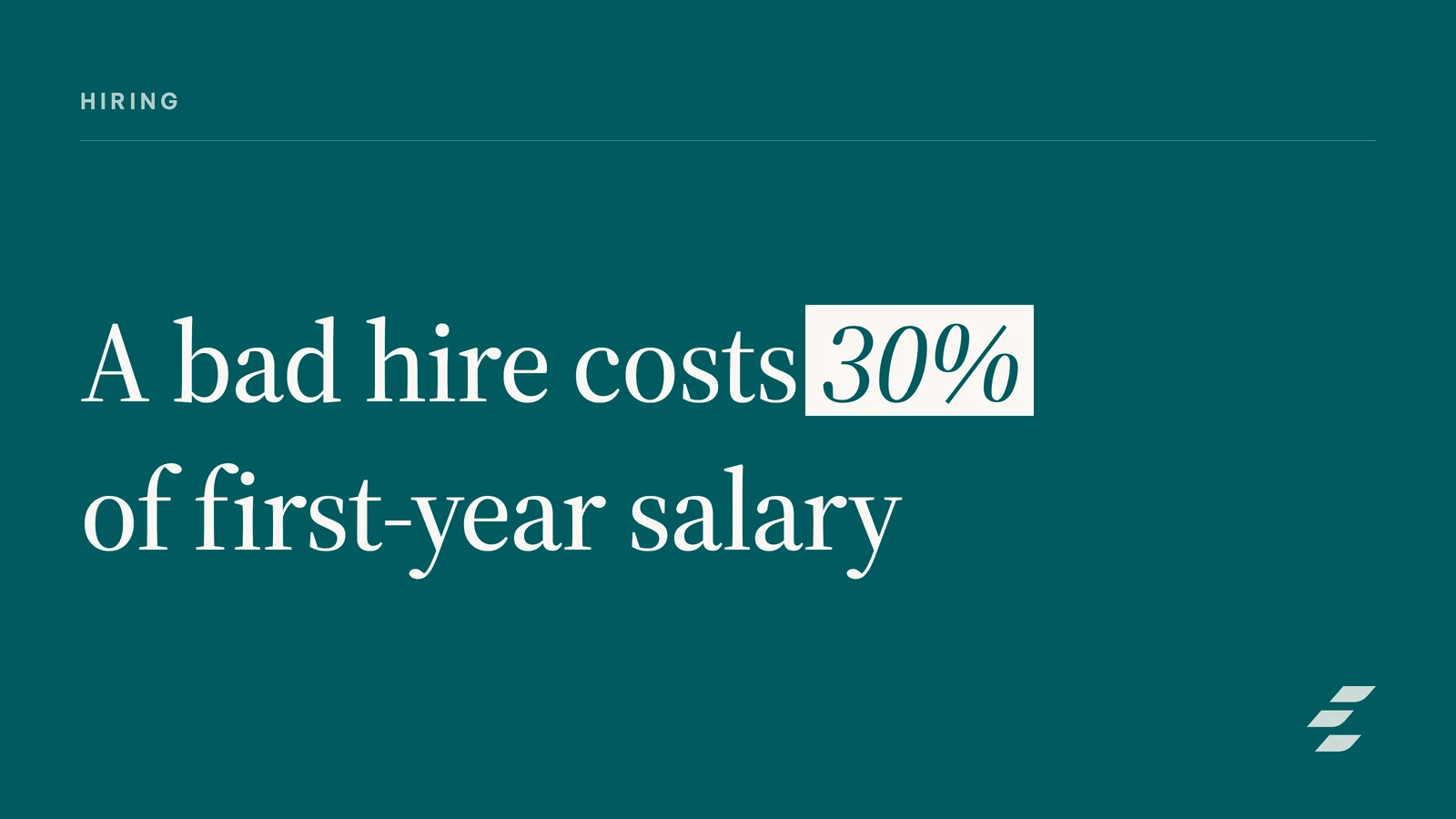
The true cost of bad hires for a resource-constrained startup extends far beyond a salary. It's a drain on precious time, capital, and morale. Imagine the hours spent on recruitment, onboarding, and training, only for a new hire to underperform or leave within months. The U.S. Department of Labor, along with industry estimates, indicates that the cost of a bad hire can range from 30% of the employee's first-year salary for entry-level positions to over 200% for executive roles. For a startup, this isn't merely a financial setback. It can derail product development, strain existing team members, and even jeopardize funding rounds. Every misstep in startup hiring strategy means lost momentum, missed opportunities, and a direct impact on your runway.
Beyond Gut Feelings: The Need for Data-Driven Decisions
Traditional hiring often leans heavily on intuition, resume screening, and unstructured interviews. These methods are ripe for unconscious bias and inconsistent evaluation. This "gut feeling" approach, while seemingly human, frequently overlooks qualified candidates and misidentifies others, hindering sustainable growth. The solution lies in embracing data-driven recruitment.
Companies that adopt these approaches see tangible benefits. According to Deloitte's 'Global Human Capital Trends' report, companies that use data-driven approaches in recruitment are 3 times more likely to improve their hiring quality and 2 times more likely to reduce time-to-hire. This isn't about replacing human judgment but enhancing it. As global industry analyst Josh Bersin notes, "AI in recruiting isn't about replacing humans; it's about augmenting human decision-making. For startups, this means moving beyond gut feelings to make more informed, unbiased, and ultimately, higher-impact hires."
Consider Wayfair's early growth phases. They heavily invested in data analytics for hiring, building internal tools to track candidate sources, interview feedback, and post-hire performance metrics. This data-centric approach allowed them to continuously refine their hiring funnels and identify key predictors of success for various roles, particularly in engineering and product. This commitment to data, even before advanced AI was widespread, demonstrates the power of moving beyond subjective assessments.
For startups, adopting a robust startup hiring strategy rooted in data isn't a luxury; it's an essential necessity to mitigate risks, optimize resources, and build a high-performing team that can truly drive innovation and achieve ambitious goals. The Role of AI in Modern Recruitment
What is AI Performance Prediction in Recruiting?
Building on the idea that a robust startup hiring strategy rooted in data isn't a luxury but a necessity, let's explore a powerful application of this principle: AI performance prediction.
Defining AI Performance Prediction for Talent Acquisition
At its core, AI performance prediction in recruiting utilizes advanced algorithms to forecast a candidate's future job success within your organization. This isn't about guesswork; it's about leveraging data to make more informed hiring decisions. For startups, where every hire is critical and resources are often constrained, mitigating the risk of a bad hire is paramount. As the U.S. Department of Labor notes, the cost of a bad hire can range from 30% of an employee's first-year salary for entry-level positions to over 200% for executive roles. This makes talent analytics AI a vital tool for optimizing your team's potential.
This predictive approach analyzes diverse data points, moving far beyond the traditional resume. The ultimate goal is to identify patterns and correlations that indicate long-term success, high performance, and a strong cultural fit within your unique startup environment. As Josh Bersin, Global Industry Analyst, aptly puts it, "AI in recruiting isn't about replacing humans; it's about augmenting human decision-making. For startups, this means moving beyond gut feelings to make more informed, unbiased, and ultimately, higher-impact hires." This focus on data-driven employee success prediction helps startups build resilient, high-performing teams from the ground up.
How AI Moves Beyond Basic Screening to Predictive Insights
Traditional recruitment often relies heavily on past experience listed on a resume or subjective interview impressions. AI performance prediction, however, delves deeper. It analyzes a broader spectrum of information, which can include:
- Structured Interview Data: Analyzing responses for specific competencies.
- Pre-employment Assessments: Cognitive ability tests, personality assessments, or skills-based challenges (like coding tests for technical roles).
- Behavioral Data: Insights from gamified assessments or even how candidates interact with your application process.
- Historical Performance Data: (Once available) correlating hiring data with actual employee performance metrics to refine future predictions.
Companies like Pymetrics (now part of Harver), initially a startup themselves, pioneered this by developing AI-powered neuroscience games to assess candidates' cognitive and emotional traits. Their platform demonstrated how it could predict job success and cultural fit more accurately than resumes, reducing bias and improving diversity for clients. Similarly, while a larger company now, Wayfair's early growth phases involved heavy investment in data analytics for hiring, building internal tools to track candidate sources, interview feedback, and post-hire performance to identify key predictors of success.
By analyzing these diverse data points, AI can uncover subtle yet powerful indicators of future performance that human recruiters might miss. This allows startups to not just fill roles, but to strategically build a team poised for innovation and growth.
The Benefits of AI in Startup Recruitment
The Strategic Advantage: Why Startups Need AI Performance Prediction
The ability of AI to uncover subtle yet powerful indicators of future performance isn't just a technological marvel; for startups, it's a profound strategic advantage. It allows you to move beyond simply filling roles to strategically building a team poised for innovation and sustainable growth.
Boosting Hiring Quality and Reducing Time-to-Hire
For a startup, every hire is critical, and a misstep can be incredibly costly. The cost of a bad hire can range from 30% of the employee's first-year salary for entry-level positions to over 200% for executive roles, a critical concern for resource-constrained startups (U.S. Department of Labor). This is where AI performance prediction becomes indispensable. By analyzing a broader range of data points than traditional methods, AI can provide objective insights into a candidate's potential for employee success prediction. This data-driven recruitment approach significantly sharpens your hiring decisions. In fact, Companies that use data-driven approaches in recruitment are 3 times more likely to improve their hiring quality and 2 times more likely to reduce time-to-hire, (Deloitte, 'Global Human Capital Trends' report, 2023). Companies like Wayfair, even in their earlier growth phases, invested heavily in data analytics to refine their hiring funnels and identify key predictors of success, demonstrating the power of this approach.
Building Diverse, High-Performing Teams from Day One
Bias, often unconscious, can creep into traditional hiring processes, limiting diversity and potentially overlooking top talent. AI, when implemented ethically, offers a powerful solution. As Josh Bersin, Global Industry Analyst, notes, "AI in recruiting isn't about replacing humans; it's about augmenting human decision-making. For startups, this means moving beyond gut feelings to make more informed, unbiased, and ultimately, higher-impact hires." By focusing on objective, performance-related traits rather than subjective impressions, AI helps level the playing field. Pymetrics (now Harver), for instance, pioneered AI-powered neuroscience games to assess candidates' cognitive and emotional traits, demonstrating how such platforms can predict job success and cultural fit more accurately while reducing bias and improving diversity. This ensures your data-driven recruitment efforts build truly high-performing, diverse teams from the outset.
Scaling Smart: Optimizing Recruitment for Rapid Growth
Rapid growth is the dream of every startup, but it often brings immense pressure on recruitment. Scaling your team quickly without compromising quality is a monumental challenge. This is where HR tech for startups like AI performance prediction shines. It automates and streamlines the initial stages of candidate evaluation, allowing your lean HR team to handle a larger volume of applicants efficiently. By 2025, 75% of organizations will have either piloted or implemented AI in HR, (Gartner, 'Predicts 2023: The Future of HR Technology', 2022), highlighting the growing reliance on AI for talent acquisition. This allows you to maintain a high bar for talent even as you expand, ensuring that every new hire contributes meaningfully to your company's trajectory.
Your Blueprint: Integrating AI Performance Prediction into Your Startup's Hiring Process
Building on the efficiency gains AI brings to your lean HR team, let's now explore how to proactively predict future success, ensuring every hire is a strategic asset. Integrating AI performance prediction into your startup hiring strategy isn't about replacing human intuition; it's about augmenting it with powerful insights. For resource-constrained startups, this is crucial: The cost of a bad hire can range from 30% of the employee's first-year salary for entry-level positions to over 200% for executive roles, a critical concern for your bottom line (U.S. Department of Labor).
Here's your blueprint for leveraging talent analytics AI to make smarter, more impactful hires:
Phase 1: Laying the Data Foundation
Before any AI tool can work its magic, you need a clear data-driven recruitment strategy. This means defining what success looks like for each role and consistently collecting relevant data.
- Define Success Metrics: Work with hiring managers to establish clear, measurable, and objective performance indicators for each role. What does a top-performing sales rep achieve? What are the key deliverables for an engineer?
- Structured Data Collection: Implement structured interview processes, standardized assessments (e.g., skills tests, cognitive assessments), and consistent performance review frameworks from day one. This builds a clean, usable dataset over time, even if it's initially small. Companies like Stripe, known for their rigorous hiring, continuously calibrate their bar using internal performance data.
Phase 2: Selecting and Implementing AI Tools
Startups often face "limited data volume" and "lack of in-house expertise" challenges. This is where leveraging third-party AI platforms becomes invaluable.
- Overcome Limitations with Third-Party Solutions: Instead of building complex models from scratch, utilize specialized HR tech vendors. Platforms like Pymetrics (now Harver) offer AI-powered neuroscience games and assessments that can predict job success and cultural fit more accurately than traditional methods, even for companies with limited historical data. This reduces the need for in-house data science expertise and integrates with common ATS systems like Greenhouse or Lever.
- Pilot Programs: Begin with pilot programs for specific, high-volume roles where performance metrics are clearer (e.g., sales, entry-level engineering) to gather initial data and prove value. Companies that use data-driven approaches in recruitment are 3 times more likely to improve their hiring quality and 2 times more likely to reduce time-to-hire (Deloitte, 'Global Human Capital Trends' report, 2023).
Phase 3: Ethical AI and Continuous Improvement
Integrating AI isn't a one-time setup; it requires ongoing ethical consideration and refinement.
- Prioritize Ethical Implementation: AI models are only as good as the data they're trained on. Actively audit your AI models for bias, use diverse training data, and ensure transparency. As Kevin Wheeler, Founder and President of Global Learning Resources, advises, "Ensuring fairness and transparency is paramount to avoid perpetuating biases and to build trust with candidates."
- Hybrid AI-Human Approach: Use AI to surface top candidates and provide data-driven insights, but always retain human oversight for final decisions. As Josh Bersin, Global Industry Analyst, says, "AI in recruiting isn't about replacing humans; it's about augmenting human decision-making." Your team's qualitative assessment of cultural fit, communication, and nuanced problem-solving remains critical.
- Continuous Feedback Loop: Regularly compare AI predictions with actual post-hire performance. Use this feedback to refine your data inputs, adjust your success metrics, and improve the accuracy of your predictive models over time.
Navigating the Hurdles: Common Challenges and Solutions for Startups
While AI's promise in recruitment is compelling, startups face unique obstacles. It's not just about augmenting human decision-making; it's about doing so effectively within resource constraints and with limited historical data. Let's tackle common AI performance prediction challenges head-on.
Overcoming Data Limitations and Defining Performance
A major hurdle for early-stage companies is the lack of extensive historical data. How can AI predict future success with only a handful of hires?
- Start Small and Focused: Begin with pilot programs for specific roles where performance metrics are clearer, like sales or entry-level engineering. This gathers initial data and proves value.
- Leverage Third-Party HR Tech for Startups: Utilize specialized platforms like Clera. These vendors often have pre-trained models from vast datasets, reducing your reliance on internal historical data. Pymetrics (now Harver), for instance, offers AI-powered assessments that predict job success and cultural fit more accurately.
- Structured Data Collection: Implement structured interview processes and consistent performance review frameworks from day one. This builds a clean, usable dataset over time. As Deloitte's 2023 report highlighted, companies using data-driven approaches are "3 times more likely to improve their hiring quality."
Mitigating Bias and Ensuring Transparency
The concern about bias in AI recruiting is valid and critical. AI models are only as good as their training data; if biased, the AI will perpetuate it.
- Ethical AI Practices and Human Oversight: Always retain human oversight for final decisions. Use AI to surface top candidates and provide insights, but let your team focus on qualitative factors and cultural fit. As Kevin Wheeler, Founder and President of Global Learning Resources, advises, "Startups must focus on ethical AI implementation... Ensuring fairness and transparency is paramount to avoid perpetuating biases."
- Actively Audit for Bias: Regularly review AI models and their outputs. Look for tools offering 'explainable AI' features to understand predictions.
- Diverse Training Data: If building custom models, ensure your training data is diverse and representative.
Integration, Cost, and Expertise: Practical Considerations
Integrating new HR tech for startups can seem daunting, both technically and financially.
- Phased Implementation: Roll out AI tools gradually. Start with a core function, gather feedback, then expand. This manages complexity and aids team adaptation.
- Vendor Support and Integrations: Choose platforms with robust integrations (e.g., Greenhouse or Lever) and strong customer support. This minimizes the need for in-house data science expertise and reduces integration headaches. Modern HR tech is often designed for user-friendliness and seamless integration, accessible even for lean startup teams.
By proactively addressing these challenges, startups can harness AI to build stronger, more diverse teams from the outset.
Essential Tools for AI-Powered Startup Recruiting
Building on our discussion about leveraging AI ethically and effectively, let's dive into the practical tools that make this possible for startups. The right HR tech for startups isn't just about efficiency; it's about making smarter, data-driven hiring decisions that fuel growth and mitigate the significant cost of a bad hire.
Applicant Tracking Systems (ATS) & Recruiting CRMs
At the core of any data-driven recruiting strategy is a robust Applicant Tracking System (ATS). These platforms are foundational for collecting, organizing, and managing candidate data throughout the hiring lifecycle. For startups, an ATS like Greenhouse or Lever is invaluable. They streamline everything from job postings and application collection to interview scheduling and feedback consolidation. This structured data is the lifeblood for any future AI-powered analysis.
Complementing your ATS, Recruiting CRMs (Candidate Relationship Management) are essential for optimizing sourcing and candidate engagement. Tools like Gem allow you to proactively build talent pipelines, automate outreach, and track interactions, ensuring you're not just reacting to applications but actively engaging with potential hires. Together, these recruiting software solutions create a comprehensive system for managing your talent funnel.
Actionable Takeaways:
- Choose Wisely: Select an ATS that offers strong integration capabilities with other tools you might use, and prioritize user-friendliness for your lean team.
- Standardize Data: Ensure your team uses the ATS consistently to log all candidate interactions and feedback. Clean data is crucial for future insights.
- Proactive Sourcing: Leverage a recruiting CRM to build relationships with passive candidates before you even have an open role.
AI-Powered Assessment & Interview Platforms
Once you have a solid data foundation, talent analytics AI tools can transform raw information into predictive insights. These platforms move beyond traditional resume screening to assess candidates' skills, cognitive abilities, and cultural fit with greater objectivity.
For instance, platforms like Pymetrics (now part of Harver) use gamified assessments to measure cognitive and emotional traits, helping predict job success and reduce bias. HireVue offers AI-driven video interviewing, analyzing candidate responses and non-verbal cues to provide deeper insights. Similarly, TestGorilla provides a wide array of pre-employment skills tests that can objectively evaluate candidates on specific competencies.
As Josh Bersin, Global Industry Analyst, aptly puts it, "AI in recruiting isn't about replacing humans; it's about augmenting human decision-making." This augmentation is critical for startups, where every hire counts. In fact, companies that use data-driven approaches in recruitment are 3 times more likely to improve their hiring quality and 2 times more likely to reduce time-to-hire, according to Deloitte's 'Global Human Capital Trends' report. The Future of AI in Recruiting
Actionable Takeaways:
- Pilot Programs: Start by implementing AI assessments for specific, high-volume roles to test their effectiveness and gather initial data.
- Focus on Fit & Skills: Utilize these tools to objectively assess skills and cultural alignment, moving beyond subjective resume reviews.
- Maintain Human Oversight: Always use AI as an enhancement to human judgment, not a replacement. Review AI-generated insights critically and combine them with human interviews.
The Future of High-Impact Hiring: Your Next Steps with AI
The actionable insights we've just covered are more than just best practices; they're a glimpse into the future of how startups will build their dream teams. The landscape of talent acquisition is evolving rapidly, and AI is at the forefront of this transformation, offering unprecedented opportunities for high-impact hiring.
For startups, every hire is critical. A single misstep can derail momentum, drain resources, and impact culture. This is why the advent of AI performance prediction is not just a technological advancement, but a strategic imperative. It's about moving beyond intuition and into a realm where data empowers you to make smarter, more informed decisions about who joins your team.
Consider the stakes: the U.S. Department of Labor and industry estimates suggest the cost of a bad hire can range from 30% of an employee's first-year salary for entry-level roles to over 200% for executives – a critical concern for resource-constrained startups. AI offers a powerful antidote to this risk. As Josh Bersin, a global industry analyst, aptly puts it, "AI in recruiting isn't about replacing humans; it's about augmenting human decision-making. For startups, this means moving beyond gut feelings to make more informed, unbiased, and ultimately, higher-impact hires." This isn't a distant dream; Gartner predicts that "By 2025, 75% of organizations will have either piloted or implemented AI in HR, up from less than 20% in 2020, with a significant portion focused on talent acquisition and workforce planning." Startups like Pymetrics (now part of Harver) have already demonstrated how AI-powered assessments can predict job success and cultural fit more accurately, reducing bias and improving diversity.
Embracing the Data-Driven Recruitment Revolution
To truly thrive in this new era, startups must embrace data-driven strategies to build stronger teams. This means leveraging technology to gain deeper insights into candidate potential and ensuring long-term employee success prediction. The future of recruiting is one where every data point, from assessment scores to interview feedback, contributes to a holistic understanding of a candidate's fit and future impact. Deloitte's research highlights this advantage, noting that "Companies that use data-driven approaches in recruitment are 3 times more likely to improve their hiring quality and 2 times more likely to reduce time-to-hire." Jeanne Meister, Executive Vice President at Future Workplace, emphasizes that "The real power of AI in talent acquisition for early-stage companies lies in its ability to identify patterns in candidate data that correlate with long-term success within their unique culture, something traditional methods often miss." By systematically collecting and analyzing this data, you can refine your hiring processes, identify what truly drives success within your unique startup environment, and consistently bring in top talent.
Ready to Transform Your Hiring?
The time to start exploring AI solutions to gain a competitive edge is now. Don't let the perceived complexity deter you. Here are your next steps:
- Start Small, Learn Fast: Begin by integrating AI tools for specific roles where you have clear performance metrics or high hiring volume. This allows you to gather data and prove value without overhauling your entire process.
- Leverage Specialized Platforms: You don't need an in-house data science team. Platforms like Clera are designed to provide sophisticated AI capabilities, offering pre-trained models and seamless integration with your existing ATS, reducing complexity and cost.
- Prioritize Structured Data: Implement structured interviews and consistent performance review frameworks from day one. The cleaner and more consistent your data, the more accurate and valuable your AI insights will be.
- Maintain Human Oversight: Always use AI as an augmentation tool. Let it surface top candidates and provide data-driven insights, but retain human judgment for final decisions, focusing on qualitative factors and nuanced cultural fit.
- Focus on Fairness: Be mindful of bias. Choose AI solutions that prioritize ethical implementation and transparency, ensuring your hiring process remains fair and equitable.
The future of high-impact hiring for startups is here, powered by AI. By embracing these data-driven strategies, you can build a more resilient, innovative, and successful team.
How AI Reduces Bias in Hiring The ROI of AI in Startup Recruitment