Train your startup's hiring managers to run better interviews. Reduce bad hires, boost team morale, and build a repeatable recruiting process.
Elevate Your Hiring: A Startup's Guide to Building a strategic hiring Manager Training Program
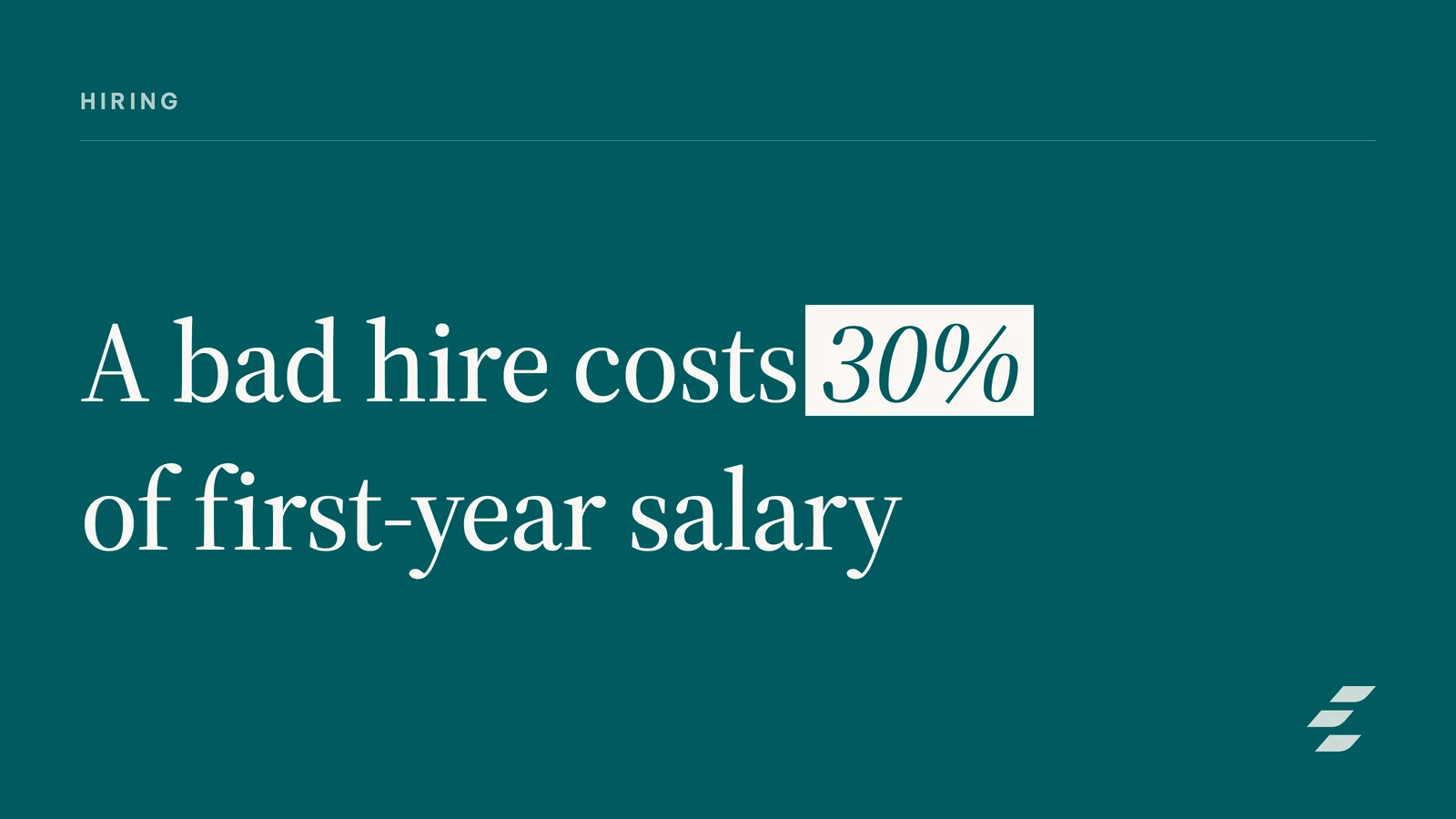
Every founder knows the excitement of a new hire, but also the fear of a misstep. In the fast-paced world of startups, where every decision has a huge impact, a single bad hire can cost your company up to 30% of that employee's first-year salary – not to mention the costly drain on morale, productivity, and precious time. As you scale, the crucial job of finding and attracting top talent often falls to your hiring managers. The challenge? Many talented leaders, experts in their fields, often lack formal training in strategic interviewing, unbiased candidate assessment, or crafting compelling candidate experiences.
This isn't just about filling open roles; it's about building the resilient, innovative team that will drive your vision. The problem isn't a lack of effort, but often a lack of a structured way to empower those leading your hiring efforts.
In this guide, we'll explore why investing in a powerful, strategic hiring manager training program is essential, not optional, for early-stage companies. You'll learn how to spot key training gaps, design effective modules, and implement a scalable program that turns your managers into confident, effective talent scouts. Get ready to elevate your hiring process from reactive to truly strategic.
Why a Strategic Hiring Manager Training Program is Crucial for Startups
You've recognized the need to empower your hiring managers, and that's the first step towards a truly strategic approach. For startups, where every decision carries huge impact, the quality of your hires isn't just about filling a seat – it's about building the very foundation of your future. This is precisely why a dedicated, strategic hiring manager training program isn't a nice-to-have; it's a must-have for lasting growth.
The High Cost of Untrained Hiring Managers
Without proper training, your hiring managers can accidentally become a big problem. Untrained managers often rely on gut feelings, leading to biased choices and, inevitably, expensive bad hires. The U.S. Department of Labor estimates a bad hire can cost up to 30% of that employee's first-year salary. For a lean startup, this isn't just a financial hit; it's a drain on vital resources, time, and team morale, often causing high regrettable turnover. Imagine a critical early-stage engineer who doesn't fit the culture or lacks the required skills – their mis-hire can derail product timelines and harm your overall startup hiring strategy. Investing in hiring manager effectiveness through training is crucial to improve your recruitment operations and avoid these pitfalls. As Josh Bersin aptly puts it, "Hiring managers are the linchpin of talent acquisition. Investing in their training isn't just about filling roles; it's about building a high-performing culture..." Josh Bersin, The Josh Bersin Company.
Elevating candidate experience and employer brand
Your hiring managers are the first impression of your company to potential hires. A poor interview experience, often from untrained managers, can quickly turn away top talent, no matter how strong your initial outreach is. A surprising 72% of candidates say the hiring manager's involvement and communication during hiring greatly impacts their decision to accept an offer (LinkedIn Talent Solutions, Global Talent Trends 2024). Effective training ensures managers can clearly share your startup's vision, culture, and the role's impact, significantly improving the candidate experience. Companies like Airbnb, known for their 'mission alignment' hiring, or Notion, which prioritizes a 'builder' mentality, empower their managers to effectively communicate and assess these subtle cultural fits. This strengthens your employer brand, making you a more appealing place for top talent in competitive markets.
Ensuring Consistent, Unbiased, and Effective Hiring
Consistency and fairness are key in today's hiring. Without structured training, managers may conduct interviews inconsistently, introduce unconscious biases, and miss key chances to assess candidates. Only 30% of hiring managers feel truly ready to conduct effective interviews (Gartner, future of recruiting Survey 2023). A strong training program gives managers standard interview methods, fair assessment tools, and knowledge of legal rules. This ensures every candidate receives a fair evaluation and every hiring decision is solid. Stripe, for instance, is renowned for its rigorous, structured hiring process, which shows a deep commitment to ensuring managers are skilled in fair evaluation. This focus on hiring manager effectiveness leads to better quality of hire and reduces the risk of legal challenges, creating a more equitable and efficient hiring system. As Lou Adler advises, "The best way to improve quality of hire is to empower hiring managers with the skills to define true job needs, assess for potential, and sell the opportunity effectively." Lou Adler, Hire With Your Head.
What is a Hiring Manager Training Program and Why Does it Matter?
To truly achieve hiring manager effectiveness for your startup's success, let's define its core: the Hiring Manager Training Program.
A Hiring Manager Training Program is a structured program that gives your team leaders the vital skills and knowledge to be great at recruiting. It goes beyond casual advice, formalizing the crucial role managers play in talent acquisition training and recruitment operations. For a startup, where every hire deeply impacts your path, this isn't a luxury, but a necessity.
Defining the Core Components
At its heart, such a program focuses on three key areas, turning managers into strategic talent partners, not just interviewers:
- Defining True Job Needs: This involves helping managers clearly define what success looks like for a role, moving past generic wish lists to specific, performance-based goals. This clarity is foundational for attracting the right candidates and setting them up for success.
- Effective Assessment: Training managers on structured interviewing techniques, behavioral questions, objective evaluation, and mitigating unconscious bias. Only 30% of hiring managers feel truly ready to conduct effective interviews, leading to inconsistent candidate experiences and biased hiring decisions (Gartner, Future of Recruiting Survey 2023). Companies like Notion, for instance, empower their managers with clear guidelines on assessing problem-solving skills and collaboration, ensuring a cohesive team that drives product innovation.
- Selling the Opportunity: Equipping managers to clearly share your startup's vision, culture, and unique value proposition. A surprising 72% of candidates say the hiring manager's involvement and communication during hiring greatly impacts their decision to accept an offer (LinkedIn Talent Solutions, Global Talent Trends 2024). This transforms managers into brand ambassadors, crucial for attracting top talent in competitive markets.
More Than Just Advice: A Smart Investment
Why does this structured approach matter, especially for a fast-paced startup where every hire counts? Because it's a strategic investment that directly boosts your profits and growth. The U.S. Department of Labor estimates a bad hire can cost up to 30% of that employee's first-year salary, often stemming from poor hiring decisions by untrained managers. A strong program dramatically improves your quality of hire, cuts down on costly turnover, and makes your talent acquisition more efficient.
As Josh Bersin aptly puts it, "Hiring managers are the linchpin of talent acquisition. Investing in their training isn't just about filling roles; it's about building a high-performing culture and ensuring every hire contributes meaningfully to the company's strategic goals." Josh Bersin, The Josh Bersin Company. Companies like Stripe, renowned for their rigorous hiring, invest heavily in making sure their managers are aligned and skilled, helping them grow fast with top talent while keeping a strong culture.
For founders, prioritizing this training means:
- Standardizing your hiring process: Ensuring consistency and fairness across all teams.
- Reducing bias: Equipping managers with tools to make objective, merit-based decisions.
- Enhancing candidate experience: Making every interaction positive and professional.
- Boosting retention: Better hires lead to longer-term employees, saving significant costs.
- Accelerating growth: Building a stronger, more effective team faster.
Building Blocks: Essential Modules for Your Training Program
With the proven benefits of structured interviewing in mind, the next step is to empower your hiring managers with the knowledge and tools to consistently excel. This isn't just about filling roles; it's about strategically building your team. The U.S. Department of Labor estimates a bad hire can cost up to 30% of that employee's first-year salary– a figure no startup can afford to ignore. A robust hiring manager training curriculum protects you from these expensive errors.
Defining the Role: Job Analysis and Success Metrics
Before a single interview takes place, your managers need to master job analysis. This module teaches them to move beyond generic job descriptions and instead define roles by specific, measurable results and performance goals. As Lou Adler, CEO of The Adler Group, advises, "The best way to improve quality of hire is to empower hiring managers with the skills to define true job needs." For a startup like Notion, defining a "builder" mentality and clear problem-solving expectations for new hires has been key to their product innovation. This ensures every hire directly contributes to your strategic goals, not just filling a seat.
Mastering the Interview: Techniques and Best Practices
This is where practical skills come in. Your interview skills training module should teach managers how to conduct structured, behavioral interviews that reveal true potential. It's alarming that only 30% of hiring managers feel truly ready to conduct effective interviews (Gartner, Future of Recruiting Survey 2023). This training must include hands-on exercises, guide creation, and vital unconscious bias training to ensure fair and objective evaluation. Companies like Stripe are renowned for their rigorous, structured hiring processes, which ensure consistent, high-quality talent even during rapid growth. Managers learn to ask the right questions, listen actively, and avoid common mistakes that lead to biased decisions.
Assessment, Feedback, and Decision Making
Once interviews are complete, managers need a clear way to assess objectively. This module focuses on combining information, using scorecards, and giving helpful feedback. It's also a key moment for building your employer brand – teaching managers how to authentically "sell" your startup's vision, culture, and growth opportunities. A surprising 72% of candidates say the hiring manager's involvement and communication during hiring greatly impacts their decision to accept an offer (LinkedIn Talent Solutions, Global Talent Trends 2024). It's not just about evaluating; it's about inspiring. Emphasize diversity, equity, and inclusion (DEI) here, ensuring decisions are based on merit and potential, not subjective "culture fit" that might accidentally exclude diverse talent.
Legal Compliance and Inclusive Hiring
Understanding hiring laws can be tough, especially for fast-paced startups. This module provides essential legal hiring compliance training, covering what managers can and cannot ask, anti-discrimination laws, and how to keep the process fair. It's not just about avoiding legal pitfalls; it's about creating an inclusive environment from the start. Airbnb, for example, evolved its hiring from a focus on "culture fit" to "mission alignment," training managers to evaluate candidates against core values and purpose, ensuring a broader, more inclusive talent pool that still resonates with their ethos. Airbnb's Mission Alignment Hiring This proactive approach protects your company and boosts your commitment to DEI.
By investing in these essential modules, you're not just training managers; you're building a foundation for sustainable growth and a truly exceptional team.
How to Design and Implement a High-Impact Training Program for Your Startup
To build a strong foundation for lasting growth and an exceptional team, you need a thoughtful approach to developing your hiring managers. Here's how to design and implement a high-impact training program for your startup, making sure every hire boosts your mission.
Phase 1: Assessment and Content Development
Before you can build, you need to understand your current situation. Start by assessing your current challenges and skill gaps in your startup recruitment process. Are managers struggling with inconsistent interviewing, leading to poor candidate experiences or biased decisions? Only 30% of hiring managers feel truly ready to conduct effective interviews, leading to inconsistent candidate experiences and biased hiring decisions (Gartner, Future of Recruiting Survey 2023). This lack of preparation can be costly; The U.S. Department of Labor estimates a bad hire can cost up to 30% of that employee's first-year salary, often due to poor hiring decisions made by untrained managers.
Your training program design should directly fix these problems. Develop a tailored curriculum that covers:
- Defining True Needs: How to write effective job descriptions and identify core competencies beyond just technical skills.
- Structured Interviewing: Techniques for objective assessment, behavioral questions, and active listening.
- unconscious bias: Awareness and strategies to reduce bias at every step of hiring.
- Candidate Experience: Best practices for communication, feedback, and creating a positive impression.
- Legal & Compliance: Key rules to avoid common mistakes.
Actionable Insight: Look at companies like Stripe, renowned for its rigorous and structured hiring. Their success suggests a strong investment in ensuring hiring managers are aligned and skilled, often through clear rubrics and a robust feedback culture.
Phase 2: Delivery and Engagement
Once your curriculum is ready, focus on how you'll implement hiring manager training effectively. For startups, time is precious, so training methods must be engaging and practical. Consider a mix of approaches:
- Interactive Workshops: Hands-on sessions for mock interviews and role-playing.
- Online Modules: Self-paced learning for foundational knowledge.
- "Hiring Manager Playbook": A concise, accessible guide with best practices, interview questions, and scorecards for every role.
Remember, a surprising 72% of candidates say the hiring manager's involvement and communication during hiring greatly impacts their decision to accept an offer (LinkedIn Talent Solutions, Global Talent Trends 2024). Empower your managers to be effective communicators and brand ambassadors.
Actionable Insight: Airbnb's early success involved training managers not just on technical skills but also on evaluating candidates against core values and the company's mission. This ensures every new hire deeply connects with your startup's purpose, building a strong culture.
Phase 3: Ongoing Support and Iteration
Training isn't a one-time event; it's an ongoing commitment to your talent acquisition strategy. Provide continuous support through:
- Regular Refreshers: Short, focused sessions on specific topics or new hiring trends.
- Feedback Loops: Encourage candidates to provide feedback on their interview experience, and managers to share insights.
- Coaching & Mentorship: Pair new hiring managers with experienced ones.
- Metrics & Evaluation: Track key metrics like time-to-fill, quality of hire, and candidate satisfaction to find areas for improvement.
Companies with a strong onboarding process improve new hire retention by 82% and productivity by over 70% (Brandon Hall Group, 2024). Effective hiring manager training is a crucial component of this process. By continuously refining your program based on data and feedback, you ensure your hiring managers remain equipped to attract and retain top talent. Platforms like Clera can streamline initial screening and scheduling, giving your hiring managers more time for deeper candidate engagement and continuous learning. The Role of AI in Modern Recruitment
Measuring the Impact: Proving the ROI of Your Training Program
As a founder, you know every investment must show a clear return. This is especially true for your hiring manager training program. By constantly refining your program with data and feedback, you ensure your hiring managers are always ready to attract and keep top talent. Platforms like Clera can streamline initial screening and scheduling, giving your hiring managers more time for deeper candidate engagement and continuous learning. The Role of AI in Modern Recruitment
Key Metrics for Hiring Manager Effectiveness
To truly measure hiring manager effectiveness and prove the ROI of training, you need to track key metrics. It's not just about filling roles; it's about filling them effectively. Focus on:
- Time-to-Fill: While influenced by many factors, a well-trained hiring manager can significantly cut delays by giving clear job needs, running efficient interviews, and making quick decisions.
- Quality of Hire: This is paramount for startups. Quality of hire metrics can include new hire retention rates, performance reviews after 3-6 months, and even peer feedback. Companies with strong onboarding, heavily influenced by effective hiring managers, improve new hire retention by 82% and productivity by over 70% (Brandon Hall Group, 2024). For a company like Stripe, known for its rigorous hiring, these metrics are crucial for maintaining high standards during rapid growth.
- Candidate Satisfaction: A positive candidate experience, largely driven by the hiring manager, is vital for your employer brand. A surprising 72% of candidates say the hiring manager's involvement and communication during hiring greatly impacts their decision to accept an offer (LinkedIn Talent Solutions, Global Talent Trends 2024). Use recruitment analytics from your ATS (like Greenhouse or Lever) to track these metrics and spot trends.
Gathering Feedback and Iterating
Numbers tell part of the story; feedback from people completes it.
- New Hire Surveys: Conduct surveys with new hires at 30, 60, and 90 days to gauge their onboarding experience, clarity of role, and satisfaction with the hiring process. This directly reflects on the hiring manager's ability to set expectations and integrate them effectively.
- Hiring Manager Feedback: Regularly ask for feedback from your hiring managers themselves. What challenges are they facing? What aspects of the training were most helpful, and what needs improvement? Remember, only 30% of hiring managers feel truly ready to conduct effective interviews (Gartner, Future of Recruiting Survey 2023). This highlights a significant opportunity for targeted training.
- Exit Interviews: Analyze regrettable turnover. The U.S. Department of Labor estimates a bad hire can cost up to 30% of that employee's first-year salary. Understanding why someone leaves can show gaps in the initial hiring decision or onboarding, highlighting training needs.
By consistently tracking these metrics and gathering feedback, you can demonstrate the tangible ROI of training. Better quality of hire means less costly turnover, higher productivity, and a stronger team, directly boosting your profits. For startups like Notion, which prioritizes a "builder" mentality, this iterative feedback loop ensures their hiring managers consistently identify and attract the right talent to drive product innovation. This data-driven approach ensures ongoing support for your training, proving it's not just an expense, but a smart investment in your company's future.
Tools and Resources to Empower Your Hiring Managers
With well-trained hiring managers as your foundation, the next crucial step is to equip them with the right recruiting tools for startups. Just as a builder needs tools, your hiring managers need the right technology to excel. As Josh Bersin, a global industry analyst, aptly puts it, "Hiring managers are the linchpin of talent acquisition. Investing in their training isn't just about filling roles; it's about building a high-performing culture and ensuring every hire contributes meaningfully to the company's strategic goals." Josh Bersin, The Josh Bersin Company.
Here’s how to empower your hiring managers with these essential tools:
Applicant Tracking Systems (ATS) & CRM
For a fast-growing startup, managing many applications by hand leads to chaos. This is where a powerful ATS for hiring managers becomes essential. An ATS streamlines the entire hiring process, from posting jobs and collecting applications to scheduling interviews and managing candidate communication. It centralizes all candidate data, making sure no promising talent is missed and providing a consistent experience.
- Actionable Insight: Implement an ATS like Greenhouse or Lever early on. These platforms offer features like structured interview kits and scorecards, which directly combat the challenge that only 30% of hiring managers feel truly ready to conduct effective interviews, leading to inconsistent candidate experiences and biased hiring decisions (Gartner, Future of Recruiting Survey 2023). This consistency is vital for startups like Notion, which relies on structured processes to maintain its "builder" culture during rapid growth. Choosing the right ATS for your startup
Assessment and Interviewing Platforms
Beyond tracking, the next challenge is objective evaluation. Relying only on "gut feelings" can lead to expensive bad hires. The U.S. Department of Labor estimates a bad hire can cost up to 30% of that employee's first-year salary, often due to poor hiring decisions made by untrained managers. This is where specialized candidate assessment tools become vital.
- Actionable Insight: Integrate platforms like HackerRank for technical skills, Pymetrics for objective soft skills (using neuroscience games), or Spark Hire for structured video interviews. These tools offer data-backed insights, helping your hiring managers move past subjective impressions to focus on true potential, ensuring a more diverse and qualified talent pool.
Leveraging AI for Efficiency (Clera)
Now, imagine taking efficiency and objectivity to the next level. This is where an AI recruiting platform like Clera comes into play. AI-powered tools are changing how startups find, screen, and engage with candidates, giving your hiring managers more time for deeper interactions.
- Actionable Insight: Explore AI-powered recruiting tools for startups like Clera. Our platform streamlines candidate matching, automates initial screening, and simplifies interview scheduling. Instead of hours sifting resumes, AI quickly finds top matches, letting your hiring managers connect with promising talent faster. This efficiency is crucial for maintaining a high bar for talent, much like how Stripe scales its rigorous hiring process by leveraging advanced tools and structured approaches. Clera
Common Pitfalls: What Not to Do When Training Hiring Managers
While AI-powered platforms like Clera can greatly streamline early talent acquisition, freeing up valuable team time, the human element remains key. Your hiring managers are the face of your startup to potential candidates, and their effectiveness directly impacts your ability to attract and keep top talent. However, many startups make common hiring manager training mistakes that hurt their recruitment efforts. Let's look at what not to do.
The 'One-and-Done' Training Trap
One of the biggest startup hiring errors is treating hiring manager training as a one-time event, not an ongoing process. A quick workshop at onboarding, and then nothing? That's a recipe for inconsistency. Only 30% of hiring managers feel truly ready to conduct effective interviews, leading to inconsistent candidate experiences and biased hiring decisions (Gartner, Future of Recruiting Survey 2023). This statistic highlights a critical gap. The hiring landscape, legal requirements, and even your company's needs evolve.
What not to do: Assume a single training session will suffice for all time. Instead: Prioritize continuous learning. Implement regular refreshers, provide access to a Hiring Manager Playbook that's updated quarterly, and build a culture of peer feedback. Companies like Notion, known for their "builder" mentality, often integrate continuous feedback loops into their hiring process, making sure managers are always improving their assessment skills.
Ignoring Bias and Legal Compliance
In the fast-paced startup world, it's easy to miss key details like unconscious bias and legal compliance. Yet, these oversights can cause big recruitment challenges, from bad hiring choices to expensive legal battles. The U.S. Department of Labor estimates a bad hire can cost up to 30% of that employee's first-year salary, often due to poor hiring decisions made by untrained managers. Many "bad hires" come from subjective, biased evaluations.
What not to do: Skip dedicated training on unconscious bias and the legal dos and don'ts of interviewing. Instead: Make sure your training clearly covers bias in hiring, including affinity bias, confirmation bias, and the halo effect. Equip managers with structured interview techniques and clear rubrics to promote objective evaluation. Airbnb, for instance, evolved its early "culture fit" hiring to focus on "mission alignment" to mitigate potential bias and ensure a more inclusive approach. Harvard Business Review This protects your startup from legal risks and helps you build a diverse, high-performing team.
Lack of Customization and Practical Application
Generic training rarely works or sticks. Your startup has a unique culture, specific roles, and distinct challenges. Training not tailored to your reality will likely be forgotten once managers return to their busy work.
What not to do: Rely on off-the-shelf, generic training that doesn't address your startup's specific context. Instead: Customize your training to offer practical, useful skills directly relevant to your roles and company values. Include mock interviews, role-playing scenarios, and case studies based on your actual hiring experiences. Stripe, renowned for its rigorous and structured hiring process, ensures its managers are deeply aligned with specific assessment criteria and company values, allowing them to scale rapidly with high-quality talent. Stripe Careers This ensures managers gain confidence and competence in evaluating candidates for your specific needs, ultimately improving the candidate experience and your quality of hire. A surprising 72% of candidates say the hiring manager's involvement and communication during hiring greatly impacts their decision to accept an offer (LinkedIn Talent Solutions, Global Talent Trends 2024).
Conclusion: Empower Your Hiring Managers, Build a Stronger Startup
As we've explored, equipping your hiring managers with the right skills isn't just about filling roles; it's about building the very foundation of your startup's future. The confidence and competence they gain directly translate into a superior candidate experience and a higher quality of hire, as evidenced by the fact that a surprising 72% of candidates say the hiring manager's involvement and communication during hiring greatly impacts their decision to accept an offer (LinkedIn Talent Solutions, Global Talent Trends 2024).
Why This is Essential for Startup Success
For a startup, every hire is critical. A bad hire isn't just a mistake; it's a huge drain, costing up to 30% of that employee's first-year salary (U.S. Department of Labor, 2024 estimates), often due to poor decisions by untrained managers. This makes investing in your hiring managers a true strategic hiring imperative. It's not just an HR task; it's a core driver of startup growth. As industry analyst Josh Bersin states, "Hiring managers are the linchpin of talent acquisition. Investing in their training isn't just about filling roles; it's about building a high-performing culture and ensuring every hire contributes meaningfully to the company's strategic goals." Josh Bersin, The Josh Bersin Company.
Empowered managers simply lead to better hires. They conduct more effective, unbiased interviews – a crucial improvement given that only 30% of hiring managers feel truly ready to conduct effective interviews (Gartner, Future of Recruiting Survey 2023). This consistency and professionalism directly lead to talent acquisition success, giving your startup an edge in attracting top talent. Companies like Notion, for instance, prioritize empowering their hiring managers with clear guidelines on assessing problem-solving and collaboration, which has been key to building a cohesive team that drives product innovation. This structured approach ensures every new team member not only has the right skills but also deeply connects with your company's mission, building a stronger culture from day one.
Ready to Transform Your Hiring Process?
The future of recruiting isn't just about finding candidates; it's about optimizing the entire journey, from first contact to successful onboarding. This means leveraging modern tools and embracing continuous improvement. Platforms like Clera, for instance, can streamline initial screening and scheduling, giving your managers more time for deeper engagement and assessment.
To truly empower your hiring managers and build a stronger startup, consider these actionable steps:
- Develop a Standardized Curriculum: Create a clear training program covering interview techniques, unconscious bias, candidate experience best practices, and legal compliance. Building an Effective Interview Process
- Implement Structured Tools: Provide interview guides, scorecards, and clear rubrics for every role. This ensures consistency and objective evaluation, reducing reliance on "gut feelings."
- Leverage Modern Technology: Integrate AI-powered recruiting platforms like Clera to automate repetitive tasks, enhance candidate matching, and provide data-driven insights, allowing managers to focus on high-value interactions.
- Foster Continuous Improvement: Establish feedback loops and ongoing coaching for hiring managers. Regularly review hiring metrics (e.g., time-to-fill, quality of hire, candidate feedback) to find areas for growth.
By making this strategic investment, you're not just filling roles; you're cultivating a team of skilled talent magnets who will drive your startup's success, one exceptional hire at a time.