Master delegating startup hiring & build a scalable recruitment engine. Free up founder time for strategy. Learn how with Clera.io's expert guide!
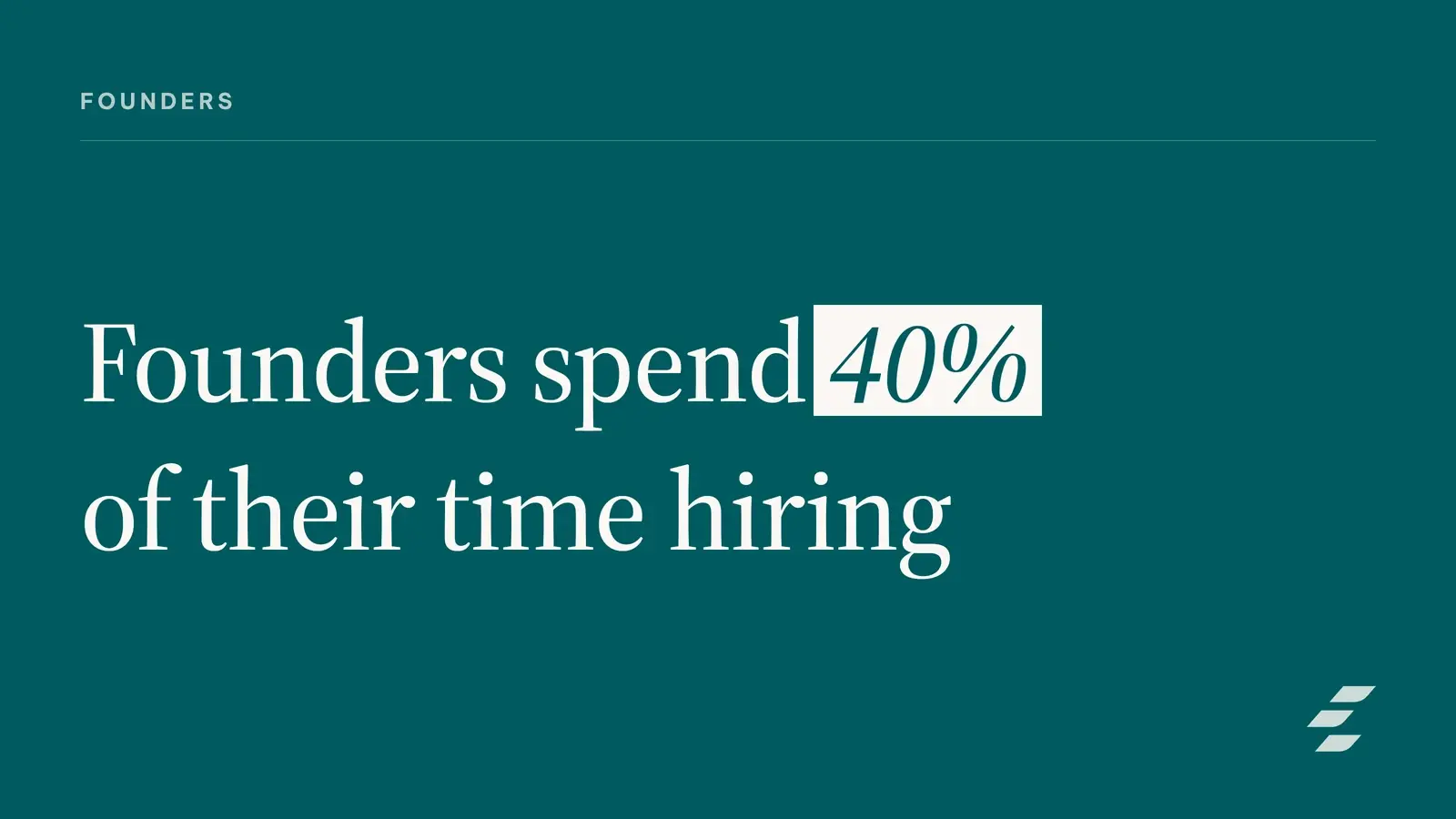
You launched your startup with a bold vision, not a desire to become a full-time recruiter. Yet, as your company grows, you likely find yourself buried in resumes, scheduling interviews, and constantly chasing talent. This is a common founder's paradox: you need exceptional people to scale, but the hands-on hiring process often becomes a massive time sink. It pulls you away from strategic initiatives. Many founders report spending upwards of 40% of their time on recruitment activities in the early stages – time better spent innovating, fundraising, or closing deals.
The challenge isn't just finding great people. It's figuring out how to effectively start delegating startup hiring. You need to build a system that consistently finds top talent without you being in the weeds every single day. This initial hands-on approach, while necessary, quickly becomes unsustainable.
In this guide, we'll show you how to transition from being the sole hiring manager to a strategic leader. You'll learn to empower your team and, ultimately, build an autonomous recruitment engine that fuels your growth. Get ready to reclaim your time and scale your team with confidence.
The Founder's Dilemma: Why Delegating Startup Hiring Becomes Critical for Growth
You've been in the trenches, personally vetting every candidate to ensure they embody your vision. This hands-on approach is crucial in the nascent stages. But as your startup gains momentum, it quickly transforms from a strength into a significant bottleneck.
The Hidden Costs of Founder-Led Hiring
As a founder, your time is your most precious resource. Yet, many founders find themselves trapped in a relentless cycle of recruitment. Founders spend an average of 20-40% of their time on hiring in the early stages, which significantly detracts from strategic initiatives (Startup Genome Report 2023). This isn't just a time sink; it's a strategic drain. It pulls you away from critical tasks like product innovation, fundraising, and market expansion.
This intense, founder-dependent involvement often leads to inefficient processes. Surprisingly, these are a major impediment to scaling. 80% of startups report that 'finding the right talent' is their biggest growth impediment, often due to inefficient or founder-dependent hiring processes (CB Insights State of Venture Report 2024). These startup growth challenges manifest in prolonged time-to-hire, missed opportunities, and a stretched leadership team. For instance, early on, Stripe's founders were deeply involved in every hire. While this ensured quality, it became unsustainable. They eventually built a dedicated talent acquisition team and robust processes to scale effectively. This allowed founders to focus on strategic growth rather than day-to-day interviewing.
Why Founders Must Step Back to Scale Up
The path to sustainable growth demands a shift in your founder recruitment strategy. It's about moving from being the primary interviewer to becoming the architect of a scalable hiring system. As Lars Schmidt, Founder of Amplify Talent, aptly puts it, "Founders must transition from being the chief recruiter to the chief architect of the recruiting engine. Your job is to design the system, not to interview every candidate." This means delegating startup hiring, not by abdicating responsibility, but by empowering your team with clear frameworks and trust.
Consider Airbnb: their founders initially conducted 'culture interviews' for every candidate. To scale, they formalized their culture code and trained a dedicated team of 'culture ambassadors' (non-recruiters from various departments) to conduct these interviews. This allowed the founders to begin stepping back from hiring without compromising cultural fit.
To effectively transition and build an autonomous recruitment engine, consider these actionable steps:
- Codify Your Vision: Document your company's values, culture, and ideal candidate profile. This becomes the blueprint for your team. Learn more about creating a hiring playbook.
- Empower Your Team: Train hiring managers and key employees on structured interviewing, unconscious bias, and candidate experience.
- Leverage Technology: Implement an Applicant Tracking System (ATS) and explore AI-powered recruiting platforms like Clera to automate sourcing, screening, and engagement, ensuring consistency and efficiency.
By embracing delegation and building a robust system, you reclaim invaluable time, overcome critical startup growth challenges, and set your company on a trajectory for exponential growth.
What is an Autonomous Recruitment Engine? Defining the Vision
You've heard the call to delegate, empower your team, and step back from the day-to-day grind of hiring. But what does that truly look like in practice? It's more than just handing off tasks; it's about building an autonomous recruitment engine. This isn't a futuristic fantasy, but a strategic imperative for any startup aiming for sustainable growth.
An autonomous recruitment engine is a self-sustaining system designed to consistently attract, evaluate, and hire top talent without requiring constant founder intervention. Think of it as a finely tuned machine that operates efficiently, allowing you, the founder, to reclaim invaluable time for strategic initiatives. Founders spend an average of 20-40% of their time on hiring in the early stages, which significantly detracts from strategic initiatives (Startup Genome Report 2023). This system is your ultimate founder recruitment strategy, transforming a bottleneck into a growth accelerator.
Beyond Just Delegation: A Systemic Approach
This vision isn't about abdicating responsibility; it's about empowering others with clear frameworks and trust. As Josh Bersin aptly puts it, "Delegation isn't about abdicating responsibility; it's about empowering others with clear frameworks and trust. For hiring, this means defining your culture, values, and ideal candidate profile so others can execute." Your role shifts from being the chief recruiter to the chief architect of the recruiting engine.
Consider Stripe's early journey: their founders were deeply involved in every hire. As they scaled, they systematically built a dedicated talent acquisition team, invested heavily in interviewer training, and created robust, data-driven hiring rubrics. This allowed them to maintain a high bar for talent while founders focused on strategic growth, demonstrating a successful transition to a more scalable recruitment process.
Core Pillars of a Scalable Hiring System
Building an autonomous recruitment engine rests on four fundamental pillars:
- Codified Values and Culture: You can't delegate what isn't defined. Jeanne Meister emphasizes, "The biggest mistake founders make is not codifying their hiring philosophy early enough." Document your company's core values, culture, and ideal candidate profile. Airbnb, for instance, formalized its culture code and trained "culture ambassadors" to conduct interviews, ensuring cultural fit without direct founder involvement.
- Structured Processes: Implement clear, repeatable steps for every stage of the hiring funnel, from sourcing to onboarding. This includes standardized job descriptions, structured interview questions, and objective evaluation rubrics. This consistency is crucial for fairness and efficiency.
- Trained Teams: Equip your hiring managers and interviewers with the skills they need. This means comprehensive training on behavioral interviewing, unconscious bias, and providing an exceptional candidate experience.
- Data-Driven Decisions: Move beyond gut feelings. Track key metrics like time-to-hire, source of hire, candidate experience scores, and new hire retention. Use this data to continuously refine and optimize your process. 80% of startups report that 'finding the right talent' is their biggest growth impediment, often due to inefficient or founder-dependent hiring processes (CB Insights State of Venture Report 2024).
By focusing on these pillars, you're not just hiring; you're building a resilient, high-performing talent acquisition machine that fuels your startup's growth. Discover more about Building a High-Performing Talent Acquisition Team.
Laying the Foundation: Codifying Your Startup's Hiring Philosophy
As a founder, your initial founder recruitment strategy likely involves a heavy dose of intuition – a "gut feeling" for who will thrive in your nascent startup. While this works for the first few hires, it quickly becomes unsustainable and unscalable. Founders spend an average of 20-40% of their time on hiring in the early stages, which significantly detracts from strategic initiatives (Startup Genome Report 2023). As Lars Schmidt, Founder of Amplify Talent, aptly puts it, "Founders must transition from being the chief recruiter to the chief architect of the recruiting engine. Your job is to design the system, not to interview every candidate." This transition begins with codifying your hiring philosophy. Without a clear, documented framework, it's impossible for others to replicate your 'gut feeling' for talent, hindering effective delegating startup hiring and stalling growth.
Defining Your Culture and Values for Recruitment
Your startup's core values aren't just words on a wall; they're the behavioral blueprint for your team. The first step in codifying your hiring philosophy is translating these abstract values into concrete, observable behaviors and actionable hiring criteria. For instance, if "radical candor" is a value, what does that look like in a candidate's past experiences or responses to interview questions?
- Actionable Insight: For each core value, brainstorm 2-3 specific behaviors that exemplify it. Then, design behavioral interview questions that probe for these behaviors.
- Case Study: Airbnb, for example, famously formalized its "culture code." To scale, they trained a dedicated team of "culture ambassadors" (non-recruiters from various departments) to conduct specific culture interviews. This allowed them to maintain a strong cultural fit without direct founder involvement in every single hire. Read the Harvard Business Review case study on Airbnb's culture.
Crafting the Ideal Candidate Profile (ICP)
Beyond cultural fit, you need clarity on the skills, experiences, and aptitudes required for each role. This is where a comprehensive 'Hiring Playbook' becomes invaluable. This playbook should detail the Ideal Candidate Profile (ICP) for common roles, outlining not just technical skills but also soft skills, problem-solving approaches, and alignment with your company's stage and challenges. It should also include structured interview questions designed to objectively assess these criteria.
- Actionable Insight: Develop a 'Hiring Playbook' that includes:
- Detailed job descriptions with clear responsibilities and desired outcomes.
- A breakdown of essential technical and soft skills.
- A bank of structured, behavioral interview questions tied to specific competencies and values.
- A standardized rubric for evaluating candidate responses.
- Case Study: Stripe, known for its rigorous hiring, systematically built out a dedicated talent acquisition team and invested heavily in interviewer training. They created robust, data-driven hiring rubrics that allowed them to maintain a high bar for talent as they scaled, ensuring a truly scalable recruitment process.
By codifying your philosophy, you empower your team to make consistent, high-quality hiring decisions. As Jeanne Meister, Executive Vice President at Future Workplace, warns, "The biggest mistake founders make is not codifying their hiring philosophy early enough. Without it, every new hire will struggle to replicate your 'gut feeling' for talent." Read the Forbes Interview. Companies that invest in scalable recruitment processes from Series A onwards are 2.5x more likely to achieve successful growth milestones (Gartner HR Research 2023). This isn't just about efficiency; it's about building a predictable, repeatable engine for talent acquisition.
How to Build Your Autonomous Recruitment Team & Process
To truly unlock growth, founders must transition from being the chief recruiter to the chief architect of the recruiting engine. Your job is to design the system, not to interview every candidate. Read the HR Executive Article by Lars Schmidt.
Empowering and Training Your Hiring Managers
Founders spend an average of 20-40% of their time on hiring in the early stages (Startup Genome Report 2023), which isn't sustainable. To build a truly autonomous hiring system, you must empower your team. This means delegating startup hiring effectively, not just offloading tasks. Implement a 'Train the Trainer' program for your hiring managers. This isn't just quick onboarding; it's a deep dive into behavioral interviewing, understanding unconscious biases, and mastering candidate experience. Consider Airbnb, which scaled its unique culture interviews by training 'culture ambassadors' from various departments, maintaining cultural fit without direct founder involvement. Equip your managers to identify top talent and represent your company's values consistently.
Implementing Structured Interviewing and Evaluation
Consistency is key to a scalable recruitment process. As Jeanne Meister, EVP at Future Workplace, notes, "The biggest mistake founders make is not codifying their hiring philosophy early enough." Read the Forbes Interview. Standardize your interview questions, moving beyond generic queries to structured, behavioral questions that probe for specific skills and cultural alignment. Develop clear evaluation scorecards or rubrics. These tools provide objective criteria for assessing candidates, reducing reliance on 'gut feeling' and mitigating bias. Stripe, for instance, invested heavily in creating robust, data-driven hiring rubrics, allowing them to maintain a high bar for talent as they scaled. This ensures every candidate is assessed fairly against the same benchmarks, leading to better, more predictable hiring outcomes.
Leveraging Technology for Efficiency and Consistency
Finally, technology is your co-pilot in building an autonomous hiring system. An Applicant Tracking System (ATS) like Greenhouse or Lever is non-negotiable for managing candidates, scheduling, and tracking progress. It standardizes workflows, ensures consistent communication, and provides a centralized hub for all hiring activities. Gusto, a Y Combinator alum, implemented a sophisticated ATS early on to manage their growing talent pipeline. Read more on Gusto's company blog. Beyond an ATS, AI-powered tools are revolutionizing the front end of the scalable recruitment process. Platforms like Clera can automate initial candidate screening, parse resumes for key skills, and engage candidates with personalized communication. This frees up your team from repetitive tasks, allowing them to focus on high-value interactions. Given that 80% of startups report 'finding the right talent' as their biggest growth impediment (CB Insights State of Venture Report 2024), leveraging these tools isn't just about efficiency; it's about competitive advantage. They help reduce the average time-to-hire, which can often exceed 60 days for critical roles (LinkedIn Talent Solutions 2023 Global Recruiting Trends), ensuring you identify the best fit, faster.
Maintaining Quality & Culture: Founder's Role in an Autonomous System
As your startup scales and you implement an autonomous hiring system, your role as a founder fundamentally shifts. You can't, and shouldn't, be in every interview. In fact, founders spend an average of 20-40% of their time on hiring in the early stages (Startup Genome Report 2023), time that could be better spent on strategic initiatives. The goal isn't to abdicate responsibility, but to empower a system that reflects your vision.
Strategic Oversight and Continuous Improvement
With an autonomous hiring system in place, your focus moves from day-to-day interviewing to strategic oversight. This means stepping back from hiring individual candidates and instead, becoming the chief architect of your founder recruitment strategy. As Lars Schmidt, Founder of Amplify Talent, aptly puts it, "Founders must transition from being the chief recruiter to the chief architect of the recruiting engine. Your job is to design the system, not to interview every candidate." Read the HR Executive Article.
Your new responsibilities include:
- Reviewing Metrics: Regularly analyze key performance indicators like time-to-hire, offer acceptance rates, candidate experience scores, and quality of hire. Are you attracting the right talent? Is the process efficient?
- Providing Feedback: Based on these metrics, provide high-level feedback to your talent acquisition team or hiring managers. Identify bottlenecks or areas for improvement in the system itself.
- Establishing Feedback Loops: Crucially, build robust feedback mechanisms. Gather insights from candidates (e.g., post-interview surveys), hiring managers (e.g., process efficiency, quality of candidates), and new hires (e.g., onboarding experience, cultural integration). This continuous loop ensures your system evolves and improves. Stripe, for instance, systematically built data-driven hiring rubrics and invested heavily in interviewer training, allowing founders to focus on strategic growth while maintaining a high bar for talent.
The Founder as Culture Architect and Vision Keeper
Beyond metrics, your most vital role becomes that of a 'culture architect' and 'vision keeper'. This means reinforcing your company's values and mission through the very design of your hiring process. Josh Bersin emphasizes that "Delegation isn't about abdicating responsibility; it's about empowering others with clear frameworks and trust. For hiring, this means defining your culture, values, and ideal candidate profile so others can execute." Read Bersin by Deloitte Research.
To achieve this:
- Codify Your Culture: Clearly define your company values, mission, and what cultural fit truly means. Jeanne Meister notes, "The biggest mistake founders make is not codifying their hiring philosophy early enough." Read the Forbes Interview.
- Design for Values: Ensure your interview questions, assessment methods, and even the candidate experience reflect these values. Airbnb, for example, scaled their "culture interviews" by formalizing their culture code and training dedicated 'culture ambassadors' from various departments to conduct these, ensuring cultural alignment without direct founder involvement in every stage.
- Empower Ambassadors: Train key employees to be culture carriers throughout the interview process, ensuring consistency even as you scale.
By embracing this strategic shift, you empower your team and your autonomous hiring system to find exceptional talent, allowing you to focus on steering your company towards its grand vision. Learn more about Building a Scalable Recruitment Process.
Common Pitfalls to Avoid When Stepping Back from Hiring
Successfully building an autonomous hiring system and empowering your team is a monumental step. However, the journey of stepping back from hiring isn't without its traps. As founders, we often carry the weight of our company's future, and letting go of direct control over talent acquisition can feel counter-intuitive. Yet, avoiding these common pitfalls is crucial for sustainable startup growth challenges and ensuring your hiring engine runs smoothly without you.
The Dangers of Incomplete Delegation
One of the biggest hurdles is the fear of losing control over candidate quality and cultural fit. This often leads to incomplete delegation, where founders technically hand over the reins but remain a bottleneck, reviewing every resume or insisting on a final "gut check" interview. This isn't true delegation; it's a recipe for burnout and inconsistent results. Founders spend an average of 20-40% of their time on hiring in the early stages, which significantly detracts from strategic initiatives (Startup Genome Report 2023).
As Josh Bersin aptly puts it, "Delegation isn't about abdicating responsibility; it's about empowering others with clear frameworks and trust. For hiring, this means defining your culture, values, and ideal candidate profile so others can execute." Read Bersin by Deloitte Research. Without these clear frameworks, your team will struggle to replicate your "founder's intuition," leading to inconsistent candidate quality.
Actionable Insight:
- Codify Your Hiring Philosophy: Document your company's core values, desired cultural attributes, and non-negotiable skills for various roles. This "Hiring Playbook" becomes the north star for everyone involved in delegating startup hiring.
- Empower with Authority: Once frameworks are in place, trust your hiring managers to make decisions within those guidelines. For instance, early Stripe founders were deeply involved in every hire. As they scaled, they systematically built out a dedicated talent acquisition team and invested heavily in robust, data-driven hiring rubrics, allowing founders to step back while maintaining a high bar for talent.
Over-Reliance on Tools Without Process
In today's tech-driven world, it's tempting to believe that simply implementing the latest Applicant Tracking System (ATS) or AI-powered screening tool will solve all your hiring woes. While platforms like Clera, Greenhouse, or Lever are incredibly powerful, they are amplifiers, not creators, of process. If your underlying hiring process is chaotic, undocumented, or inconsistent, these tools will only amplify that chaos.
Imagine Gusto, a Y Combinator alum, which focused on building a strong employer brand and leveraging employee referrals before implementing a sophisticated ATS. They understood that the tool's effectiveness hinged on a clear strategy and well-defined stages. Without a clear, documented process for candidate evaluation, communication, and feedback, even the most advanced tools can lead to:
- Inconsistent Candidate Experience: Different hiring managers using the same tool in different ways can create a disjointed journey for applicants.
- Ineffective Data: If you're not tracking the right metrics or have inconsistent data entry, your tools won't provide valuable insights for improvement.
Actionable Insight:
- Process First, Tools Second: Before investing heavily in new tools, map out your ideal hiring workflow. Define each stage, who is responsible, and what outcomes are expected.
- Standardize Workflows: Use your chosen tools to enforce your documented process. For example, ensure all interviewers use standardized scorecards within your ATS, rather than relying on ad-hoc notes. Learn more about Optimizing Your ATS for Startup Growth.
The Training Gap: Ensuring Consistency
Even with clear delegation and robust tools, a critical pitfall is insufficient training for hiring managers. Your managers are now the frontline of your talent acquisition efforts. If they lack proper training in areas like behavioral interviewing, unconscious bias, or how to articulate your company culture, you risk inconsistent candidate experiences and flawed evaluations. 80% of startups report that 'finding the right talent' is their biggest growth impediment, often due to inefficient or founder-dependent hiring processes (CB Insights State of Venture Report 2024).
Airbnb famously scaled its culture interviews by formalizing its culture code and training a dedicated team of "culture ambassadors" (non-recruiters from various departments) to conduct these interviews. This ensured cultural fit was maintained without direct founder involvement in every stage.
Actionable Insight:
- Invest in Interviewer Training: Develop a mandatory training program for all new hiring managers and interviewers. Cover structured interviewing techniques, how to assess for cultural fit based on your codified values, and best practices for candidate experience.
- Provide Ongoing Support: Create a forum or regular check-ins where hiring managers can share best practices, discuss challenges, and receive continuous guidance. This fosters a culture of continuous improvement in your hiring process.
Tools & Resources for Building Your Recruitment Engine
While robust interviewer training and ongoing support are crucial for empowering your team, equipping them with the right technology is equally paramount. To truly build a scalable recruitment process and free up your valuable time, you need to leverage powerful recruitment tools that automate, streamline, and standardize your hiring efforts.
Essential Recruitment Software
As founders, you're often spending 20-40% of your time on hiring in the early stages, which significantly detracts from strategic initiatives (Startup Genome Report 2023). This isn't sustainable. Your goal should be to become the "chief architect of the recruiting engine," as Lars Schmidt of Amplify Talent advises, not the chief recruiter. This means designing a system that works for you.
First, Applicant Tracking Systems (ATS) are non-negotiable. Platforms like Greenhouse or Lever are designed to manage your entire hiring pipeline, from initial application to offer. They standardize workflows, centralize candidate data, and ensure a consistent candidate experience. Companies like Gusto, a Y Combinator alum, successfully implemented sophisticated ATS early on to enable consistent evaluation and reduce founder bottlenecks as they scaled. Read more on Gusto's company blog. This investment is critical; companies that invest in scalable recruitment processes from Series A onwards are 2.5x more likely to achieve successful growth milestones (Gartner HR Research 2023).
Next, consider AI-powered platforms for automating repetitive tasks. Tools like Clera are revolutionizing how startups approach hiring by automating sourcing, initial screening, and candidate engagement. This moves you closer to an autonomous hiring system, allowing your team to focus on high-value interactions rather than sifting through countless resumes. Imagine the time saved when AI can pre-qualify candidates based on your specific criteria, ensuring only the most relevant profiles reach your hiring managers.
Finally, assessment tools provide objective evaluation. Platforms like HackerRank for technical skills or Pymetrics for soft skills and aptitude use data-driven methods to assess candidates beyond just their resume or interview performance. This helps mitigate unconscious bias and ensures you're hiring based on objective criteria. Airbnb, for instance, formalized their culture code and trained "culture ambassadors" to ensure cultural fit was maintained at scale, a principle that can be further enhanced by objective assessment tools.
Further Learning and Best Practices
Implementing these recruitment tools is just the first step. To truly build an effective engine, consider these best practices:
- Develop a Hiring Playbook: Codify your company values, ideal candidate profiles, and structured interview questions. As Jeanne Meister notes, "The biggest mistake founders make is not codifying their hiring philosophy early enough." Read the Forbes Interview. This ensures consistency across all hires. Learn more about Creating a Startup Hiring Playbook.
- Integrate Tools Seamlessly: Ensure your ATS, AI platform, and assessment tools communicate effectively. This creates a unified, efficient workflow.
- Data-Driven Decisions: Leverage the analytics provided by these tools to continuously refine your process. Track metrics like time-to-hire, source of hire, and candidate satisfaction.
- Empower Your Team: Train your hiring managers not just on how to use the tools, but why they are essential for building a high-performing team.
By strategically deploying these tools and adopting these practices, you can transform your hiring from a founder-dependent bottleneck into a robust, scalable recruitment process that fuels your startup's growth.
Conclusion: Reclaim Your Time, Accelerate Your Startup's Growth
The journey of building a startup is a relentless sprint, demanding your full attention on product, market, and customers. Yet, as we've explored, many founders find themselves caught in the hiring weeds, personally vetting every candidate. This isn't sustainable. Founders spend an average of 20-40% of their time on hiring in the early stages, which significantly detracts from strategic initiatives (Startup Genome Report 2023). It's time to shift your perspective and embrace a more strategic approach.
The Strategic Advantage of Delegation
Your role as a founder is to be the visionary, the architect of your company's future, not its chief recruiter. The power of delegating startup hiring isn't about abdicating responsibility; it's about empowering your team and building a system that can scale. As Lars Schmidt, Founder of Amplify Talent, wisely puts it, "Founders must transition from being the chief recruiter to the chief architect of the recruiting engine. Your job is to design the system, not to interview every candidate." Read the HR Executive Article.
Consider Stripe: in their early days, founders were deeply involved in every hire. But as they scaled, they systematically built a dedicated talent acquisition team, invested in interviewer training, and created robust hiring rubrics. This allowed the founders to step back from day-to-day interviewing, maintaining a high bar for talent while focusing on strategic growth initiatives. This strategic shift is crucial, especially when 80% of startups report that 'finding the right talent' is their biggest growth impediment, often due to inefficient or founder-dependent hiring processes (CB Insights State of Venture Report 2024). By empowering others, you reclaim precious time to focus on core strategic initiatives, driving faster growth and innovation.
Your Next Steps to Building an Autonomous Engine
Building an autonomous recruitment engine is a strategic investment that pays dividends in talent quality and operational efficiency. Companies that invest in scalable recruitment processes from Series A onwards are 2.5x more likely to achieve successful growth milestones (Gartner HR Research 2023). This isn't just about filling seats; it's about embedding your culture and values into every hire, consistently and efficiently.
To truly transform your founder recruitment strategy and build a scalable recruitment process, here are your actionable next steps:
- Codify Your Hiring Philosophy: Don't rely on 'gut feeling.' Document your company's values, culture, and ideal candidate profiles. As Jeanne Meister, EVP at Future Workplace, advises, "The biggest mistake founders make is not codifying their hiring philosophy early enough." Read the Forbes Interview. This playbook becomes the blueprint for everyone involved in hiring. Learn How to Create a Startup Hiring Playbook.
- Train and Empower Your Team: Equip your hiring managers with the skills and frameworks they need. This includes structured interviewing techniques, unconscious bias training, and a clear understanding of your codified philosophy. Airbnb, for instance, formalized their culture code and trained 'culture ambassadors' from various departments to conduct interviews, ensuring cultural fit without direct founder involvement in every stage.
- Leverage Smart Technology: Embrace tools that automate and streamline the process. Platforms like Clera can handle sourcing, screening, and candidate engagement, freeing up your team to focus on high-value interactions. An Applicant Tracking System (ATS) like Greenhouse or Lever, combined with AI-powered screening, ensures consistency and efficiency.
By taking these steps, you're not just delegating tasks; you're building a resilient, high-performing talent acquisition machine. Reclaim your time, accelerate your startup's growth, and focus on the vision only you can bring to life.