Member of Technical Staff - Applied ML
About this role
Basis is seeking an applied ML engineer to own end-to-end projects that bring intelligence into production. You’ll build systems that help our agents reason, plan, and evaluate themselves with autonomy to scope, experiment, and ship from first principles. This role blends research-minded thinking with practical engineering to deliver safer, smarter agent workflows at scale.
What youll do
- Build and evolve Basis' agent systems by designing and iterating multi-agent architectures that automate real accounting workflows.
- Encode autonomy boundaries, tool usage, and fallback behaviors to keep agents safe and reliable.
- Manage context and memory for coherence across steps; plan and execute agent loops with measurable success criteria.
- Route, evaluate, and optimize models under real-world constraints (latency, cost, accuracy).
- Design and implement scalable evaluation pipelines (offline + online) that run hundreds of experiments automatically.
- Define golden tasks, labeling strategies, and metrics that make performance measurable and comparable.
- Instrument the stack to detect regressions, track error taxonomies, and drive closed-loop improvement.
- Architect prompt stacks and retrieval pipelines; parse messy documents into structured representations for reasoning.
- Design guardrails and validation layers to keep behavior safe and deterministic; scope projects with concise specs.
- Build, test, and instrument end-to-end systems; communicate progress, learnings, and next steps within your pod.
What Basis is looking for
- 3+ years of AI/ML engineering experience.
- Strong CS fundamentals; background in math or physics is a plus.
- Experience building retrieval and indexing pipelines.
- Experience architecting frameworks or pipelines to measure, compare, and improve model and product performance through structured feedback loops.
- Experience as a software engineer at a fast-paced startup (Series A–D), hedge fund, or complex SaaS company.
- Experience parsing messy documents into structured representations.
- Experience with end-to-end LLM applications including benchmarking, model orchestration, and performance testing to evaluate agent behavior and reliability.
- Proficiency in Python.
- Experience designing and iterating multi-agent architectures.
Company at a glance
Basis is a New York-based AI company that develops intelligent agents for accounting, enabling accountants to automate complex tasks like journal entries, reconciliations, and tax workbooks.
What happens next
Skip the application pile. I get you in front of the people who decide.
Confirm the fit
A few questions to make sure this role is the right shape for you. Two minutes.
I pitch you to the company
I write the intro, send it to the founder, and handle the back-and-forth.
A meeting lands on your calendar
When the company wants to meet, I get the call on your calendar. You just show up.
Culture & values
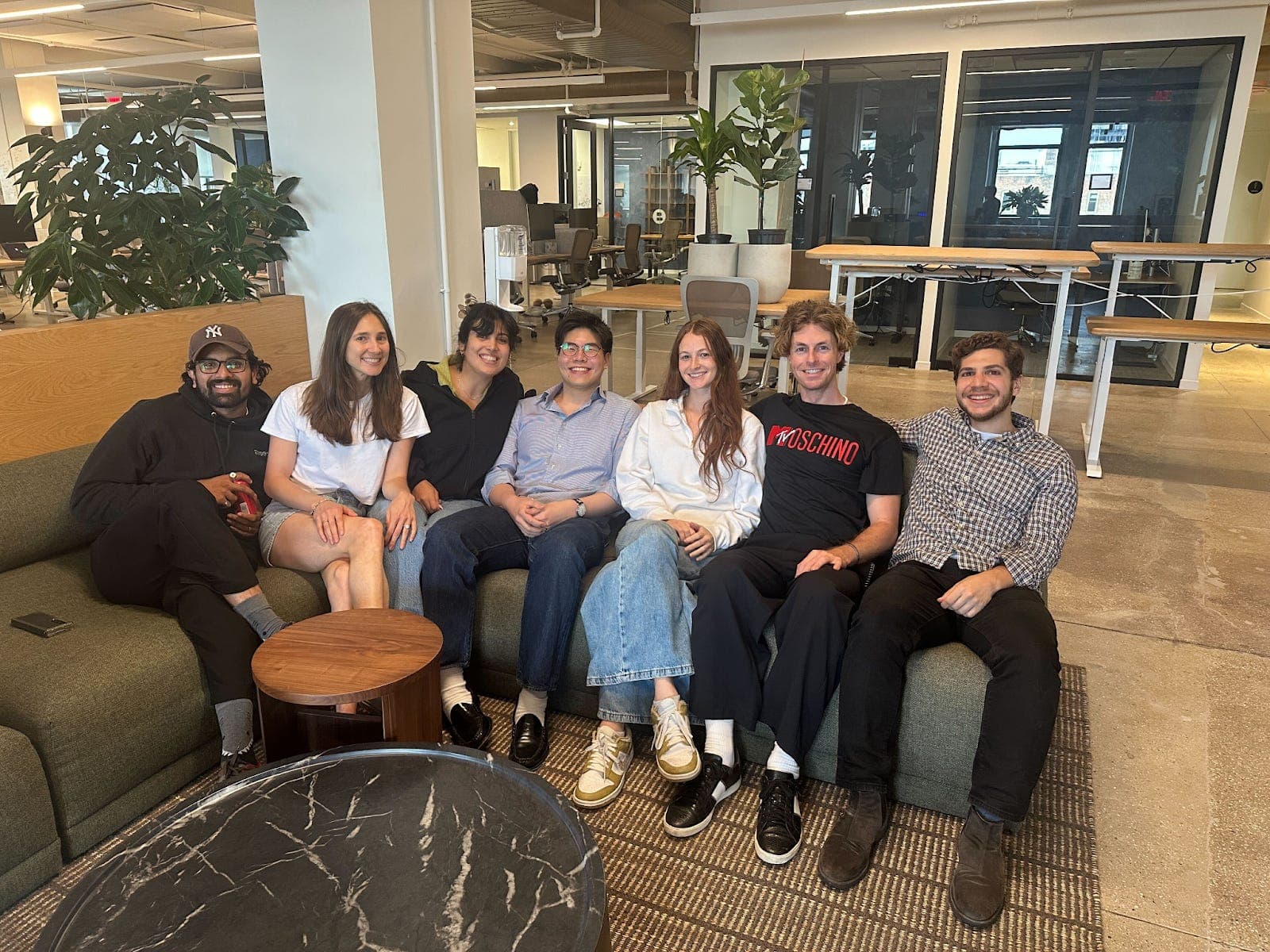
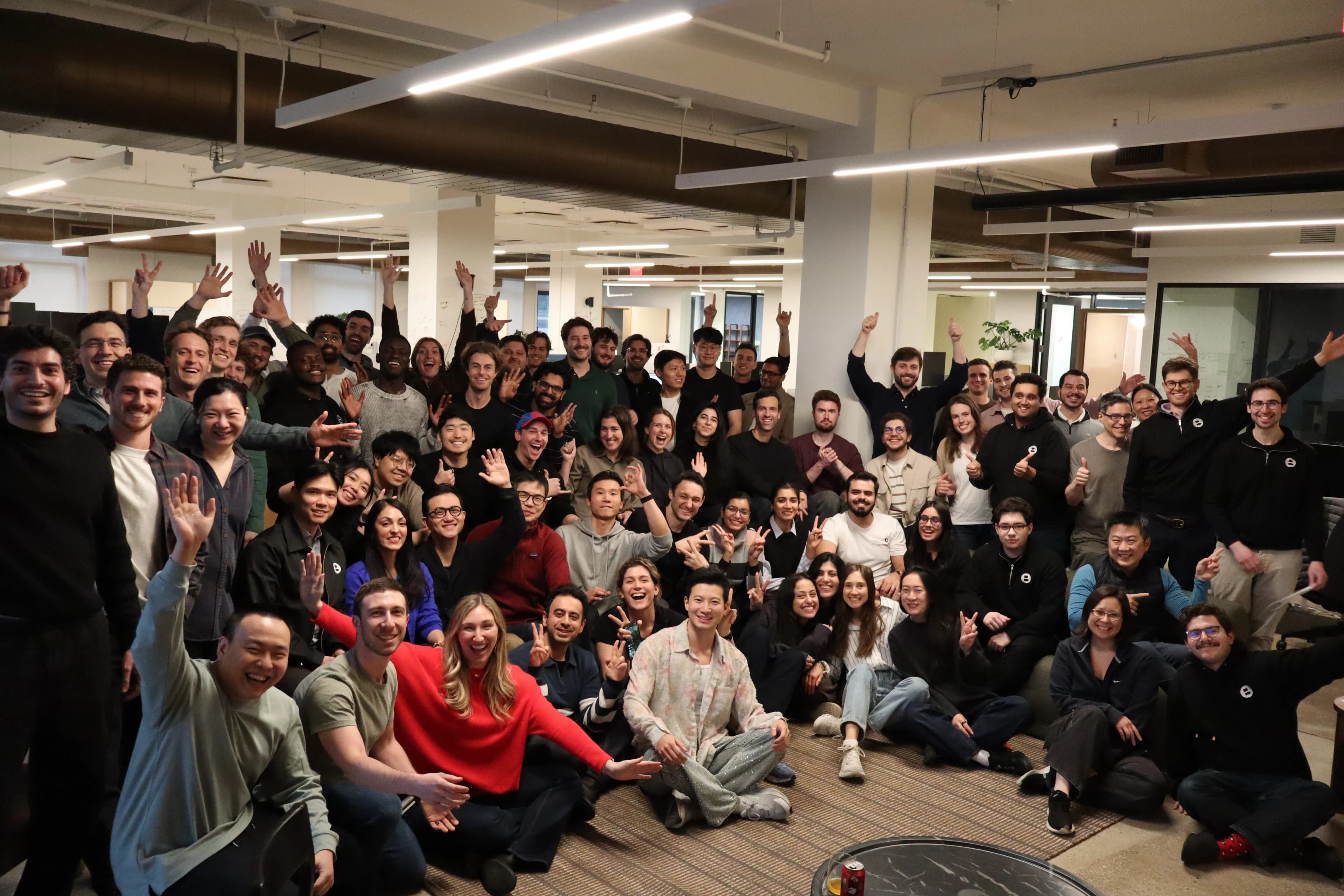
Fully in-person team with shared love of solving hard problems using whiteboards
Core belief that agents would become integral to knowledge work
Focus on massively ambitious projects
Know someone who'd be great for this?