Master assessing code quality in interviews with our startup guide. Avoid costly mis-hires & build a strong dev team. Learn best practices now!
hiring top developers: A Startup's Guide to Effectively Assessing code quality in Technical Interviews
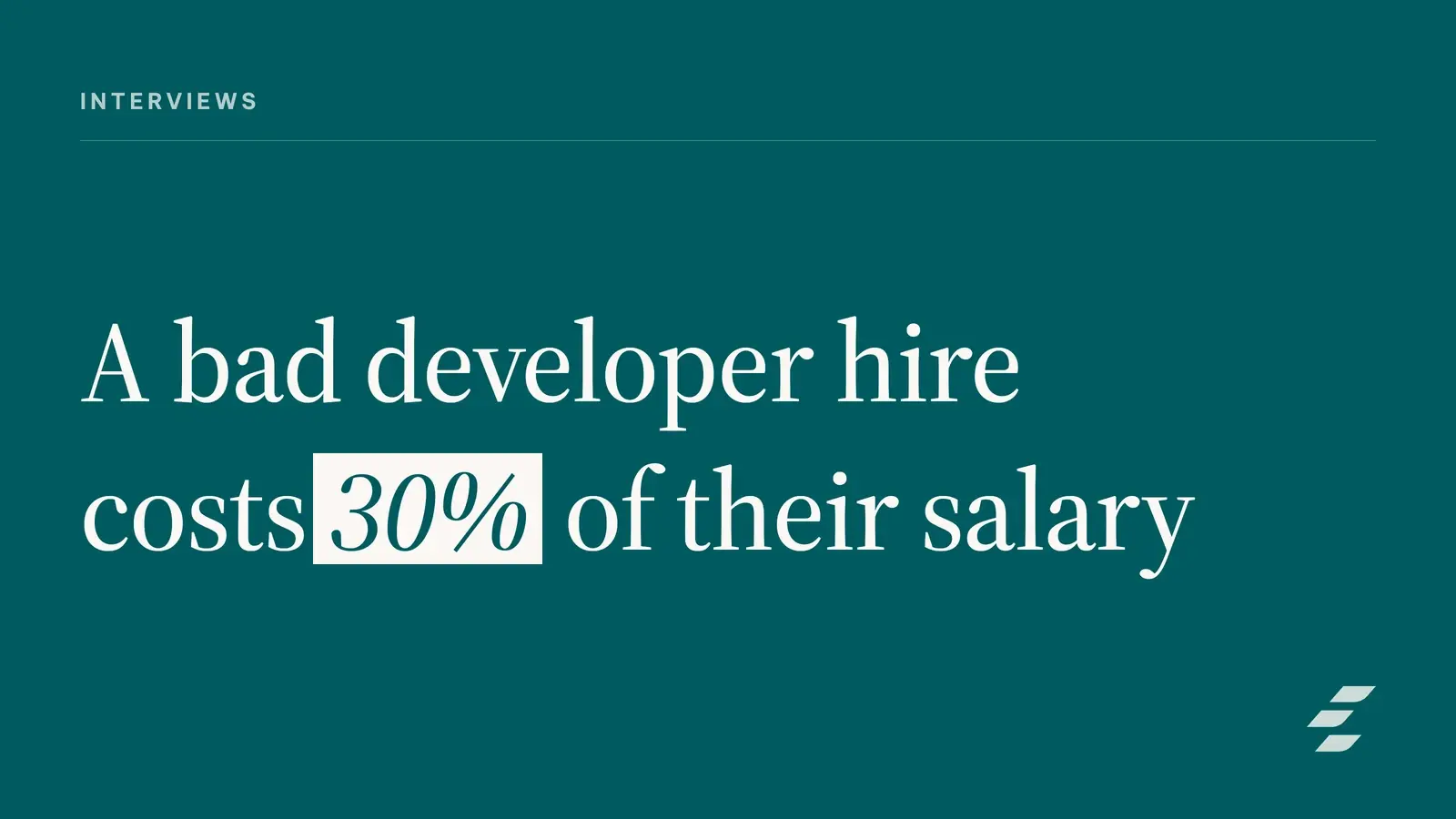
You've poured everything into building your startup. A bad developer hire can quickly derail your progress. Such a mistake can cost up to 30% of that employee's first-year salary, a huge sum for any early-stage company. Beyond money, poor code creates technical debt, slows innovation, and can even threaten your product's future.
The real challenge isn't just finding someone who can code. It's about hiring top developers who consistently deliver high-quality, maintainable, and scalable solutions. For startups, every line of code matters. Assessing code quality effectively during technical interviews is crucial, yet many companies overlook or poorly execute it.
This guide offers practical, actionable strategies to move beyond basic coding challenges. You'll learn how to design interview questions that reveal a candidate's true coding craftsmanship. We'll show you how to spot red flags and build a strong framework for evaluating technical depth and attention to detail. Get ready to transform your hiring process and build a development team that truly elevates your product.
Why Code Quality is Non-Negotiable for Startups: The True cost of a bad hire
Let's start by understanding why code quality is so vital. Moving beyond basic coding challenges is crucial, yet often overlooked. For startups, this isn't just about finding a good developer; it's about safeguarding your future. The stakes are incredibly high, and the true cost of a bad hire can be devastating.
The Hidden Costs of Subpar Code
It's a puzzling truth in startup tech recruiting: 87% of recruiters say talent is their top priority (HR Dive, citing a Robert Half report), yet 70% of hiring managers admit to making a bad hire (HR Dive, citing a Robert Half report). For an early-stage company, this isn't just an inconvenience; it's a direct threat. The cost of a bad hire goes far beyond salary. The average cost can be up to 30% of the employee's first-year salary, easily exceeding $50,000 for a senior developer (U.S. Department of Labor) – and that's just the start.
A developer who writes brittle, unmaintainable code creates technical debt from day one. This isn't just about bugs. It slows future development, makes new features harder to build, and frustrates your team. Think of Segment (acquired by Twilio). They avoided major issues because early hires showed exceptional developer quality importance through tough take-home projects. Their foundational API stayed strong, helping them scale fast. Poor code means more debugging, less innovation, and a slower path to product-market fit. This makes focusing on code quality in your technical interviews a necessity, not a luxury. Learn more about designing effective technical interviews.
The Startup Imperative: Why Every Technical Hire Matters
For early-stage companies facing startup hiring challenges, every hire is a make-or-break decision. Elad Gil, entrepreneur and investor, wisely states in his High Growth Handbook: "For early-stage startups, every hire is critical. You can't afford to hire someone who writes brittle code or can't adapt. Your technical interview needs to simulate the actual work environment as much as possible, including code reviews and collaborative problem-solving." You simply cannot afford talent that writes brittle code or lacks adaptability. Your first engineering team sets the cultural and technical standards for years.
Look at Stripe, known for its tough hiring process. They don't just seek algorithm solvers. They prioritize candidates who show clean code, thoughtful design, and a deep grasp of practical, API-related problems. This ensures every new engineer builds a strong, scalable codebase, avoiding future headaches. In a fast-paced startup, where changes are constant, non-adaptable talent quickly becomes a bottleneck, draining resources and morale. Your startup tech recruiting strategy must find not just competence, but true craftsmanship and resilience.
Actionable Takeaways:
- Prioritize Real-World Scenarios: Move beyond abstract puzzles. Design challenges that mirror your actual product development.
- Assess Adaptability: Look for candidates who demonstrate a growth mindset and can learn new technologies quickly.
- Emphasize Code Hygiene: Evaluate readability, testability, and maintainability as much as functionality. Learn more about evaluating code craftsmanship.
What Does "Good" Code Quality Look Like in a Technical Interview?
So, what exactly does 'good' code quality mean in an interview setting? Moving from basic competence to true craftsmanship, it's clear traditional technical interviews often fail. As founders, we know every hire is critical. Yet, the current situation is tough: Only 30% of developers believe current technical interviews accurately assess their skills (HackerRank Developer Skills Report 2023). This means many talented engineers are missed, or worse, bad hires slip through, costing startups time and money. So, what does "good" code quality truly look like in an interview, and how can we find it?
Beyond Functionality: Key Attributes of production-ready code
For a startup, "good" code quality means more than just working code. We define it by its readiness for the real world. This means seeing if a candidate can produce production-ready code. This includes readability, maintainability, and testability – the signs of a strong codebase that can grow with your product.
Stripe, known for its tough technical interviews, often uses Take-home assignments or pair programming. These focus on practical, API-related problems. They emphasize clean code, test coverage, and thoughtful design, not just solving the problem. This helps them find engineers whose code works today and can be easily understood, debugged, and extended by a growing team tomorrow. Ignoring these points can create huge technical debt, which can kill a startup. The average cost of a bad hire can be up to 30% of the employee's first-year salary, easily exceeding $50,000 for a senior developer (U.S. Department of Labor) – a cost made worse by poor code quality.
The Developer's Thought Process: More Than Just the Solution
The best technical interviews explore how a candidate thinks, not just what they know. Gayle Laakmann McDowell, author of 'Cracking the Coding Interview,' aptly puts it: "The best technical interviews focus less on obscure algorithms and more on how a candidate approaches real-world problems, debugs code, and collaborates. It's about understanding their thought process and code hygiene, not just if they can memorize a solution." This focus on the journey, not the destination, is crucial for a full coding skill evaluation.
When assessing a candidate, watch their problem-solving method. Do they clarify needs? Do they think about edge cases? How do they debug problems? This shows their code hygiene – their attention to detail, error handling, and overall professionalism. Vercel, for example, often uses open-source contributions or practical coding challenges related to their product. They check not just functional code, but also performance, maintainability, and modern web development best practices, often through live coding or code review. This lets them see a candidate's thought process, evaluating their ability to write code that meets their high standards.
Actionable Takeaways for Founders:
- Prioritize Real-World Relevance: Design coding challenges that mirror actual problems your team faces, moving beyond abstract algorithmic puzzles.
- Evaluate Beyond Functionality: Implement clear rubrics for evaluating code craftsmanship that explicitly assess readability, maintainability, and testability, not just correctness.
- Focus on the "How": During live coding or pair programming, actively probe a candidate's thought process, debugging approach, and their commitment to good code hygiene best practices.
- Leverage Take-Home Projects: Consider take-home assignments to allow candidates to demonstrate their best work without interview pressure, providing a clearer picture of their production-ready code capabilities.
Designing Effective Technical Interviews to Assess Code Quality
Now that we understand what good code looks like, let's design interviews to find it. Beyond just checking if code works, effective technical interviews explore its quality – readability, maintainability, and testability. For startups, where every hire deeply affects product speed and technical debt, this difference is crucial. After all, 70% of hiring managers admit to making a bad hire (HR Dive, citing a Robert Half report, 2023 data). Such a mistake can cost a lot, easily over $50,000 for a senior developer (U.S. Department of Labor). This is why strong technical interview best practices are not just good HR; they are a strategic must.
Crafting Relevant Coding Challenges
The days of asking obscure algorithm questions, unrelated to daily work, are thankfully ending. Gayle Laakmann McDowell, author of 'Cracking the Coding Interview,' aptly puts it: "The best technical interviews focus less on obscure algorithms and more on how a candidate approaches real-world problems, debugs code, and collaborates." For your startup, this means designing real-world coding challenges that reflect your actual work.
Consider incorporating elements like:
- Simulated Feature Development: Ask candidates to build a small feature relevant to your product, using your tech stack. Segment (acquired by Twilio) famously used take-home projects like this. This let them check code quality, architecture, and problem-solving in a real way.
- Code review exercises: Show candidates existing code (maybe with flaws). Ask them to review it, find issues, and suggest improvements. This directly checks their understanding of code hygiene best practices and critical thinking. Vercel often uses live coding or code review to assess maintainability and modern web development.
- Collaborative Problem-Solving: Use pair programming sessions. Candidates work with an interviewer on a small task. This checks coding ability, communication, debugging, and how they handle feedback – all crucial soft skills for developer hiring.
Remember, only 30% of developers believe current technical interviews accurately assess their skills (HackerRank Developer Skills Report 2023). By focusing on practical, relevant problems, you get better insights and offer a more positive candidate experience.
The Power of Structured Interviews and Clear Rubrics
While challenge content is vital, the evaluation process is just as critical. Laszlo Bock, former SVP of People Operations at Google, emphasizes in his book Work Rules! that "Standardized, structured interviews are key to reducing bias and improving predictive validity." For assessing code quality, this means:
- Consistent Questions: Ensure all candidates for a given role face similar challenges and follow-up questions. This allows for a fair comparison.
- Clear Rubrics: Create clear, objective scoring rubrics. Define what "good" code quality means for your startup. Beyond just correctness, include readability (clear names, comments), maintainability (modularity, design patterns), testability (unit tests, clear separation), and efficiency.
- Interviewer Training: Train your interviewers. Teach them to use rubrics, ask about thought processes, and reduce unconscious biases. Stripe, known for tough technical interviews, stresses thoughtful design and test coverage. Their interviewers are aligned on these priorities.
Implementing structured interviews ensures that your assessment of code quality is objective and consistent, leading to better developer hiring decisions and ultimately, a stronger engineering team.
Practical Techniques for Assessing Code Quality in Interviews
Beyond structured interviews, specific techniques can reveal a candidate's true coding abilities. Structured interviews and clear rubrics set the stage for fair assessment. But a candidate's true coding skill evaluation often comes from the practical techniques you use. For startups, every hire is critical. The cost of a bad hire can be huge –up to 30% of the employee's first-year salary, easily exceeding $50,000 for a senior developer (U.S. Department of Labor). These methods are invaluable for finding engineers who write production-ready code.
Take-Home Assignments: A Realistic View of Candidate Work
Take-home assignments are a powerful way for candidates to show their best work without live coding pressure. This gives a real look at their coding style, architecture, and attention to detail. It's a chance to deliver a complete, well-planned solution, including testing and documentation.
- Actionable Insight: Design assignments that reflect small, real-world problems your team faces. Early-stage Segment (acquired by Twilio) often used take-home projects that simulated building a small feature. This let them check code quality, architecture, and problem-solving in a realistic way. (See Segment Engineering Blog for more).
- Why it matters: Only 30% of developers believe current technical interviews accurately assess their skills (HackerRank Developer Skills Report 2023). This shows we need methods that truly reflect a candidate's abilities.
Live Coding & Pair Programming: Collaboration and Problem-Solving
Pair programming sessions show a candidate's real-time problem-solving, communication, and immediate code hygiene. Unlike solo live coding, this teamwork format checks how they interact, explain their thoughts, and adapt to feedback. It's more about the journey than an instant perfect solution.
- Actionable Insight: Give candidates a small, focused task that needs interaction. Stripe, for example, uses pair programming for practical, API-related problems, focusing on clean code and thoughtful design. (See Stripe Engineering Blog for more). This helps you see their debugging approach and how they handle unclear situations. For more, check out effective debugging strategies.
Code Review Exercises: Uncovering Critical Thinking
Code review exercises are great for checking a candidate's critical thinking and grasp of best practices. Show them existing code (maybe with flaws). Ask them to find issues and suggest improvements related to readability, maintainability, performance, and security.
- Actionable Insight: Give a small codebase. Ask candidates to find problems, suggest improvements, and explain why. Vercel often checks modern web development best practices through live coding or code review. They look beyond just functional code to performance and maintainability. (See Vercel Careers Page for more). This shows their deep knowledge and commitment to quality.
By integrating these practical techniques, you move beyond theoretical knowledge to truly assess a candidate's ability to produce high-quality, maintainable code—a non-negotiable for any growing startup.
Essential Tools and Platforms for Streamlined Technical Assessments
To make these assessments efficient, the right tools are essential. As a founder, you know every technical hire is critical, especially in fast-paced startups. A wrong hire can be very costly – up to 30% of an employee's first-year salary, easily over $50,000 for a senior developer (U.S. Department of Labor). To avoid this, you need a strong, efficient, and fair assessment process. Using the right tools isn't just convenient; it helps you make smarter, data-driven hiring decisions.
Online Coding Assessment Platforms
The first step in startup tech recruiting often involves an automated coding assessment platform. These coding assessment tools are invaluable. They screen many candidates, check basic skills, and spot red flags before you spend time on deeper interviews. Candidates show their skills in a controlled setting, often solving real-world problems.
- How they help: Platforms like HackerRank, CoderPad, CodeSignal, and TestGorilla offer challenges, custom questions, and proctoring. They quickly filter out candidates without basic coding skills, saving your engineering team many hours.
- Example: Many early-stage startups, much like Segment in its growth phase, use these platforms for initial screens, often preceding a take-home project. This helps them efficiently narrow down the pool to candidates who can actually code, rather than just talk about it.
- Actionable Insight: Don't use these for a final decision. As only 30% of developers believe current technical interviews accurately assess their skills (HackerRank Developer Skills Report 2023), these tools are best as a strong initial filter, not a full evaluation of a candidate's potential or code quality.
Leveraging ATS and Version Control for Deeper Insights
Once you find promising candidates, managing their journey is crucial. This is where Applicant Tracking Systems (ATS) excel. These platforms handle the entire recruiting process, from application to onboarding. They ensure no candidate is missed and streamline communication.
- How they help: Tools like Greenhouse and Lever are collaborative hiring suites. They help schedule interviews, gather feedback, and track progress. This greatly reduces the average 42 days startups spend to fill a technical role (Workable Hiring Report 2023).
- Integrating with Version Control: Don't forget platforms like GitHub. For take-home assignments or open-source work, GitHub lets you review actual code quality, commit history, and collaboration. This gives much richer context than just a live coding session.
- Example: Companies like Stripe and Vercel often ask candidates to share GitHub profiles or complete take-home assignments. These are reviewed for clean code, test coverage, and thoughtful design, reflecting their engineering cultures. (See Stripe Engineering Blog for more).
The Future of Hiring: AI-Powered Recruiting with Clera
While coding assessment tools and applicant tracking systems streamline processes, the next step in startup tech recruiting is AI recruiting platforms. These advanced systems aim to solve the core challenge: intelligently matching the right talent with your specific needs and culture.
- How they help: AI platforms like Clera can help with smart candidate matching and screening. They go beyond keywords to understand a candidate's experience and fit. They analyze data to find top talent that might be missed, reducing bias and improving hiring accuracy.
- Addressing the Challenge: 87% of recruiters prioritize talent, yet 70% of hiring managers admit to making a bad hire (HR Dive, citing a Robert Half report). AI aims to close this gap by offering deeper insights and more objective screening.
- Example: Clera, for instance, is being developed to automate initial screening and provide smart insights into candidate profiles. It can even analyze code quality from submitted projects. This offers a full view of a developer's skills and fit with your startup's technical vision. Learn more about how AI enhances candidate matching.
By strategically deploying these essential tools, you can transform your technical assessment process from a time-consuming bottleneck into a streamlined, insightful, and highly effective engine for securing top-tier talent for your startup.
Common Pitfalls to Avoid When Assessing Developer Code Quality
Even with the best tools, common mistakes can derail your assessment. Let's look at what to avoid. Even with the most sophisticated tools, your developer assessment depends on how you use them. Many fast-growing startups make common technical interview mistakes. These lead to costly bad hires and big developer assessment challenges. Avoiding these pitfalls is crucial for strong startup tech recruiting.
Overlooking Maintainability for Functionality
A common developer assessment challenge is only checking if code "works," not its long-term health. In a fast startup, it's easy to prioritize immediate function. But code that just works, yet is brittle, poorly structured, or lacks tests, will create technical debt. It will slow future development and become a nightmare to maintain.
Elad Gil, a seasoned entrepreneur and investor, wisely notes in his High Growth Handbook: "For early-stage startups, every hire is critical. You can't afford to hire someone who writes brittle code or can't adapt." The average cost of a bad hire can be up to 30% of the employee's first-year salary (U.S. Department of Labor)– a sum no startup can waste. Companies like Stripe emphasize clean code, test coverage, and thoughtful design. They understand that production-ready code is much more than just "does it work."
Actionable Insight:
- Beyond "Does it Work?": During coding challenges or take-home projects, explicitly evaluate for readability, modularity, error handling, and testability.
- Code Review Exercises: Incorporate sessions where candidates review existing code (perhaps with intentional flaws) and discuss improvements, demonstrating their understanding of maintainability.
Unstructured Interviews and Unconscious Bias
A big pitfall in startup tech recruiting is not having standard assessment criteria. This leads to inconsistent evaluations and hiring bias. Without clear rubrics, interviewers may focus on different things. This makes it hard to compare candidates fairly. This inconsistency can mean missing qualified people or hiring someone who doesn't fit the team's needs.
Laszlo Bock, former SVP of People Operations at Google, emphasizes in his book Work Rules! that "Standardized, structured interviews are key to reducing bias and improving predictive validity." 87% of recruiters prioritize talent, yet 70% of hiring managers admit to making a bad hire (HR Dive, citing a Robert Half report, 2023 data). This sharp contrast shows the need for more objective processes.
Actionable Insight:
- Standardize Your Process: Develop clear, consistent rubrics for evaluating code quality, including specific criteria for readability, efficiency, and design patterns.
- Interviewer Training: Train your interviewers on these rubrics and on recognizing and mitigating unconscious biases. Learn more about mitigating bias in technical hiring.
The "Algorithm Trap" and Ignoring Real-World Skills
Many technical interview mistakes come from relying too much on complex algorithm puzzles. These often don't reflect a developer's daily work. Data structures and algorithms are important, but focusing only on obscure problems can push away talented developers. It also fails to check their practical problem-solving skills. Only 30% of developers believe current technical interviews accurately assess their skills (HackerRank Developer Skills Report 2023).
Gayle Laakmann McDowell, author of 'Cracking the Coding Interview,' suggests: "The best technical interviews focus less on obscure algorithms and more on how a candidate approaches real-world problems, debugs code, and collaborates." For a startup, where adaptability and practical skills are crucial, this "algorithm trap" can lead to hiring smart but ineffective engineers. Segment (acquired by Twilio) used take-home projects that mimicked small feature builds. This let them check real-world code quality and architectural choices.
Actionable Insight:
- Prioritize Practicality: Design coding challenges that simulate real-world problems your team faces, such as building a small API endpoint, integrating with a third-party service, or debugging an existing codebase.
- Pair Programming: Incorporate pair programming sessions to assess not just coding ability, but also communication, collaboration, and immediate problem-solving skills.
Conclusion: Build a Stronger Startup with Superior Code Quality
In summary, building a strong startup means prioritizing superior code quality from the start. We've explored practical coding challenges and pair programming. It's clear that building a strong, innovative startup needs more than just working code. It demands superior code quality. This requires a better approach to startup tech hiring. The conclusion is simple: investing in effective developer assessment is not a luxury; it's a core strategy for long-term success and growth.
The Long-Term Impact of Quality Hires
For an early-stage startup, every hire is a big investment and crucial for your future. A bad hire can cost a lot – up to 30% of the employee's first-year salary (U.S. Department of Labor), easily over $50,000 for a senior developer. This financial drain, plus lost productivity and low team morale, can be very harmful. Elad Gil, entrepreneur and investor, wisely states in his High Growth Handbook: "For early-stage startups, every hire is critical. You can't afford to hire someone who writes brittle code or can't adapt."
This shows why effective developer assessment is crucial. Stripe is a great example. They are known for tough technical interviews that prioritize clean code, test coverage, and thoughtful design, not just algorithms. By focusing on how candidates solve real-world problems and show code hygiene, you reduce bad hires. You also actively build a strong engineering team that values quality and teamwork from day one. Read more on the importance of code quality in startups.
Your Next Step Towards Top-Tier Talent
The good news: improving your developer hiring process is achievable. Only 30% of developers believe current technical interviews accurately assess their skills (HackerRank Developer Skills Report 2023). This is your chance to make your startup stand out. Use structured, real-world interviews. You'll attract and accurately find top talent. Use modern tools and best practices to streamline your process and ensure consistency. Laszlo Bock, former SVP of People Operations at Google, champions standardized, structured interviews for reducing bias and improving predictive validity in his book Work Rules!.
Here are actionable steps to elevate your hiring:
- Standardize Assessments: Develop clear rubrics for evaluating code quality, focusing on readability, maintainability, testability, and efficiency, not just functionality.
- Embrace Real-World Challenges: Utilize take-home assignments or pair programming sessions that mirror your actual product development, allowing candidates to showcase their best work and collaborative spirit.
- Leverage Technology: Use platforms like CoderPad for live coding or automated screening tools like HackerRank. Consider AI-powered platforms like Clera to smartly match candidates and streamline your entire recruiting workflow. This frees up valuable time for your technical leads.
- Train Your Interviewers: Ensure your team understands how to objectively assess code quality and soft skills, fostering a consistent and fair interview experience.
By prioritizing superior code quality in your hiring process, you're not just filling a role; you're laying the groundwork for a scalable, robust, and successful startup.